

Bigger better batteries
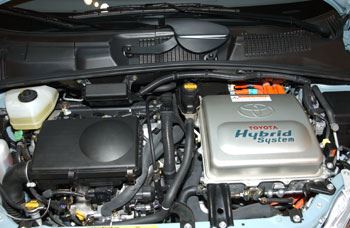
Mass production of hybrid electric cars with large rechargeable batteries could be a step closer after a study by Swedish and French scientists.
The findings are reported in the latest edition of The Royal Society of Chemistry's Journal of Materials Chemistry.
With the potential for use in electric vehicles, solar power and emergency power supplies, there is a rapidly developing need for larger and cheaper rechargeable lithium ion batteries
Professor Josh Thomas, of Uppsala University, Sweden, carried out the research on an iron silicate-lithium material, in conjunction with colleagues at Centre National de la Recherche Scientifique (CNRS), France.
He said: "Materials currently used in lithium ion batteries are prohibitively expensive for large scale commercial applications.
"We are aiming to make larger lithium ion batteries an economically viable proposition, and this is a highly promising and cheap material for large scale use."
Professor Russell Egdell, of Oxford University, said Professor Thomas had used a technique called photoelectron spectroscopy (PES) to demonstrate the suitability of the material to large scale use.
Many electrodes made of other materials develop a thin film on their surface as a result of a reaction between the electrode and fluid in the battery - which leads to a decrease in battery efficiency.
PES revealed that unlike other electrode materials, the iron silicate-lithium electrode did not develop this film.
Professor Thomas said: "Iron silicate - lithium electrodes do not lose capacity in this way."
with thanks to Suzanne Abbott for the original article
Press office
- Tel:
- +44 (0) 20 7440 3351
- Email:
- Send us an email