


What would you like to know about Environmental Science: Advances?
Impact factor: n/a
Time to first decision (all decisions): 21 days**
Time to first decision (peer reviewed only): 55.0 days***
Editors-in-Chief: Zongwei Cai, Kevin Jones, Célia Manaia
Gold open access, APCs waived until mid-2024
Indexed in the Directory of Open Access Journals (DOAJ), ResearchGate, Scopus and Web of Science.
A new home for all environmental work addressing global challenges
Environmental Science: Advances spans not only chemistry, but research from any discipline related to the environmental sciences.
We welcome research from any discipline that will contribute to the understanding of the environment, and to the advancement of several UN Sustainable Development Goals – original thinking to take on the world’s biggest challenges.
Environmental Science: Advances is gold open access, with all article processing charges waived until mid-2024.
Find out why Environmental Science: Advances is a great home for your research.
Join us in tackling the UN SDGs
We welcome contributions to our cross-journal collections across our environmental science journals showcasing research that advances the following UN SDGs. State the following in your Comments to the Editor when you submit your next paper on these themes:
UN SDG 6: Clean water and sanitation – XXSDG0622
UN SDG 12: Responsible consumption and production – XXSDG1222
UN SDG 13: Climate Action – XXSDG1322
UN SDG 14: Life below water – XXSDG1422
All submissions to our Open Calls will undergo Initial Assessment by the journal Associate Editors and subsequent peer review as per the usual standards of RSC journals.
Scope
This journal is for anyone, in any discipline, working to advance environmental sustainability. We seek to publish work which improves our understanding of the environment and offers solutions or improvements to building a cleaner, safer, healthier, more sustainable and equitable world.
Fundamental environmental research is welcomed, alongside modelling, fieldwork, applied studies, policy work and studies at the environmental and social science interface. Studies that enhance holistic environmental understanding, for example by connecting different environmental compartments, linking to human health and wellbeing, and joining up other disciplines, are particularly welcome.
Truly interdisciplinary, the journal welcomes research from any field related to the environmental sciences, global environmental change, and sustainability science. Inclusive collaboration across research disciplines is important for scientific advancement and as such, we welcome studies from a broad range of topics including:
- biosciences
- engineering
- ecology
- hydrology
- soil science
- geoscience
- atmospheric science
- agricultural science
- climate science
- social science interface
- and much more
Studies that advance our understanding of the physical environment, environmental health, and environmental sustainability, or provide solutions to challenges in these areas are particularly welcome. All submitted manuscripts will be judged on their quality, interest, and potential impact, to ensure we publish novel and significant contributions.
Submissions
Submissions are initially assessed and taken through peer-review by our high-profile, internationally-recognised Associate Editors. Authors are free to choose a single-anonymised or double-anonymised peer review model, and a minimum of two reviewer reports are required.

High-quality peer review
All manuscripts published in Environmental Science: Advances undergo a rigorous peer review process, with the reputation, standards, commitment and expertise that you would expect from a Royal Society of Chemistry journal.

Society focused
Our team is part of the Royal Society of Chemistry, a not-for-profit organisation driven by its mission to support the scientific community and help everyone in it to succeed.

Open to all
Research that helps to tackle environmental challenges must be available easily and quickly. Environmental Science: Advances is gold open access, with all APCs currently waived.

Where disciplines unite
Is your focus oceanography? Soil science? Climate science? We welcome quality research from any area related to environmental science to present an accurate overview of developments.

Progressive publishing
Choose from single- or double-anonymised peer review, keep an eye on your article’s status using our article tracker, and feel confident about a constantly improving submissions process.
See who's on the team
Meet the board members on our Environmental Science: Advances journal.

Editor-in-chief
Hong Kong Baptist University, Hong Kong, China

Editor-in-chief Lancaster University, UK

Editor-in-chief Universidade Católica Portuguesa, Portugal

Associate Editor
Norwegian Institute for Air Research, Norway

Associate Editor
Institute of Earth Environment, Chinese Academy of Sciences, China

Associate Editor
Columbia University, USA
Associate Editor
Norwegian University of Science and Technology, Norway

Associate Editor
Fudan University, China

Editorial board member
IDAEA-CSIC, Spain
Damia Barceló, Institute of Environmental Assessment and Water Research, Spain
Chuncheng Chen, Institute of Chemistry, Chinese Academy of Sciences, China
Jiping Chen, Dalian Institute of Chemical Physics, China
Zhi-Feng Chen, Guangdong University of Technology, China
Saikat Dutta, Amity University, India
Maofa Ge, Institute of Chemistry, Chinese Academy of Sciences, China
Tom Harner, Environment and Climate Change Canada
Rong Ji, Nanjing University, China
Ramanan Laxminarayan, One Health Trust, Washington D.C., United States
Yongjie Li, University of Macau
Hemi Luan, Guangdong University of Technology, China
Jurgita Ovadnevaite, National University of Ireland Galway, Ireland
Francois Perreault, University of Quebec at Montreal, Canada
Debora Rodrigues, University of Houston, USA
Andreas Schäffer, RWTH Aachen University, Germany
Philippe Schmitt-Kopplin, Helmholtz Zentrum München, Germany
Dörthe Tetzlaff, Humboldt University of Berlin, Germany
Mark van Loosdrecht, Delft University of Technology, Netherlands
Meizhen Wang, Zhejiang Gongshang University, China
Zhe Wang, Hong Kong University of Science and Technology
Dengsong Zhang, Shanghai University, China
Xuan Zhang, University of California, Merced, USA
Emma Eley, Executive Editor ORCID: 0000-0002-6379-8502
Demitra Ellina, Deputy Editor
Alex Holiday, Editorial Assistant
Lucy Argyle, Editorial Production Manager
Jamie Purcell, Assistant Editor
Alexander John, Assistant Editor
Emily Ellison, Assistant Editor
Jack Pitchers, Assistant Editor
Clare Fitzgerald, Assistant Editor
Lee Colwill, Publishing Assistant
Neil Hammond, Publisher ORCID: 0000-0001-6390-8874
Featured Articles
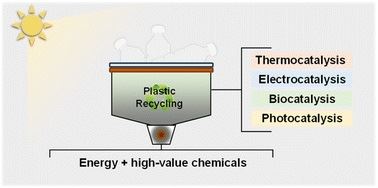
Advancements in catalysis for plastic resource utilization
The widespread production and utilization of plastic products have become ingrained in our society, resulting in a staggering amount of plastic waste, severe environmental challenges, and resource depletion. To address this issue sustainably, catalytic technology has emerged as a promising approach to break down non-biodegradable polymers into tiny organic molecules for secondary applications.
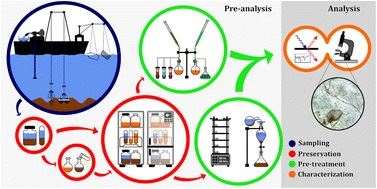
Preservation, storage, and sample preparation methods for freshwater microplastics – a comprehensive review
Due to their long-lasting negative effects on the environment and detrimental impact on the health of living organisms, microplastics (MPs), found in both water and sediment matrices, have attracted researchers' attention recently. Although various research and reviews have been conducted about MP occurrence and abundance in aqueous environments, less attention has been paid to freshwater matrices through which MPs enter oceans and seas.
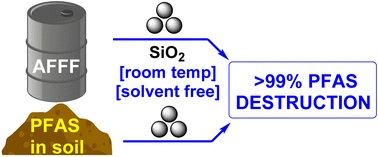
Mechanochemical destruction of per- and polyfluoroalkyl substances in aqueous film-forming foams and contaminated soil
Per- and polyfluoroalkyl substances (PFASs) are a class of synthetic chemicals of concern that exhibit extreme persistence within the environment and possess physicochemical properties that are resistant to targeted degradation. Comprising substantial concentrations of PFASs, aqueous film-forming foams (AFFFs) present a major exposure pathway to the environment having been applied to land at firefighting-training sites globally for decades.
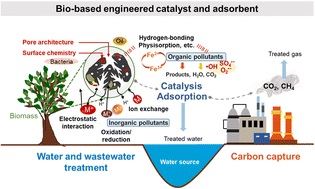
Integrated 3D pore architecture design of bio-based engineered catalysts and adsorbents: preparation, chemical doping, and environmental applications
An integrated strategy combining 3D architecture design and chemical doping holds great promise for enhancing the performance of bio-based engineered carbon materials in environmental applications. This review paper critically examines the use of integrated hierarchical porous carbon derived from biomass (bio-based IHPC) as an engineered catalyst and adsorbent for environmental purposes.
Peer Review
All articles published in Environmental Science: Advances are subject to external peer review by experts in the field and all manuscripts submitted are handled by a team of internationally recognised Associate Editors, who are all practicing scientists in the field.
To offer our authors a more inclusive set of options, Environmental Science: Advances offers the following peer review options:
Single-anonymised peer review – where reviewers are anonymous and author names and affiliations are known to reviewers.
Double-anonymised peer review – both the authors’ and reviewers’ identities are anonymous.
More information can be found here.
The peer review for all articles submitted to the journal consists of the following stages:
Phase 1: Your manuscript is initially assessed by an associate editor to determine its suitability for peer review
Phase 2: If the manuscript passes the initial assessment process, the associate editor solicits recommendations from at least two reviewers who are experts in the field. They will provide a report along with their recommendation.
Phase 3: The associate editor handling your manuscript makes a decision based on the reviewer reports received. In the event that no clear decision can be made, another reviewer will be consulted.
Environmental Science: Advances is committed to a rigorous peer review process and expert editorial oversight for all published content. Please refer to our processes and policies for full details including our appeals procedure.
Ethical Requirements
Environmental Science: Advances authors, editors, reviewers and published works are required to uphold the Royal Society of Chemistry’s ethical standards. The Royal Society of Chemistry is a member of Committee on Publication Ethics (COPE) and our ethical standards follow COPE’s core practices and best practice guidelines. In cases where these guidelines are breached or appear to be so, the Royal Society of Chemistry will consult with COPE guidelines and act accordingly.
When a study involves the use of live animals or human subjects, authors must include in the 'methods/experimental' section of the manuscript a statement that all experiments were performed in compliance with the author’s institute’s policy on animal use and ethics; where possible, details of compliance with national or international laws or guidelines should be included. The statement must name the institutional/local ethics committee which has approved the study; where possible, the approval or case number should be provided. A statement that informed consent was obtained for any experimentation with human subjects is required. Reviewers may be asked to comment specifically on any cases in which concerns arise.
For further guidance on author responsibilities and code of conduct, which apply to Environmental Science: Advances and to all manuscripts submitted to Royal Society of Chemistry journals, please visit our author hub.
Open access
There are no submission charges for Environmental Science: Advances, and no article processing charges until mid-2024. As part of the submission process, authors will be asked to agree to the Environmental Science: Advances open access terms & conditions.
We offer Environmental Science: Advances authors a choice of two Creative Commons licences: CC BY or CC BY NC. Publication under these licences means that authors retain copyright of their article, but users are allowed to read, download, copy, distribute, print, search, or link to the full texts of articles, or use them for any other lawful purpose, without asking prior permission from the publisher or the author. Read our open access statement for further information.
All published articles are deposited with LOCKSS, CLOCKSS, Portico and the British Library for archiving.
Dive into the benefits of open access publishing
Find out more about open access publishing routes
Subscription information
Environmental Science: Advances is fully gold open access – articles can be downloaded free from the website with no barriers to access. Environmental Science: Advances publishes 12 issues per year.
Online only ISSN 2754-7000
Copyright
Copyright is retained by authors when an open access licence is accepted, as with our standard licence to publish agreement. Full and accurate attribution to the original author is required for any re-use of the work. Find out more about copyright, licences and re-use permission.
Get email alerts about Environmental Science: Advances
For the latest editorial board news, scope details and announcements, sign up for news and issue alerts using the form below:
**The median time from submission to first decision including manuscripts rejected without peer review from the previous calendar year
***The median time from submission to first decision for peer-reviewed manuscripts from the previous calendar year
Contact us
- Email:
- Emma Eley
- Email:
- Lucy Argyle