

You can find details about how to access information remotely in this step-by-step guide. The guide will also help if for any reason you have difficulty accessing the content you want.
What would you like to know about this journal?
Journal of Materials Chemistry A is a Transformative Journal and Plan S compliant
Impact factor: 11.9*
Time to first decision (all decisions): 10.0 days**
Time to first decision (peer-reviewed only): 30.0 days***
Editor-in-Chief: Anders Hagfeldt
Open access publishing options available
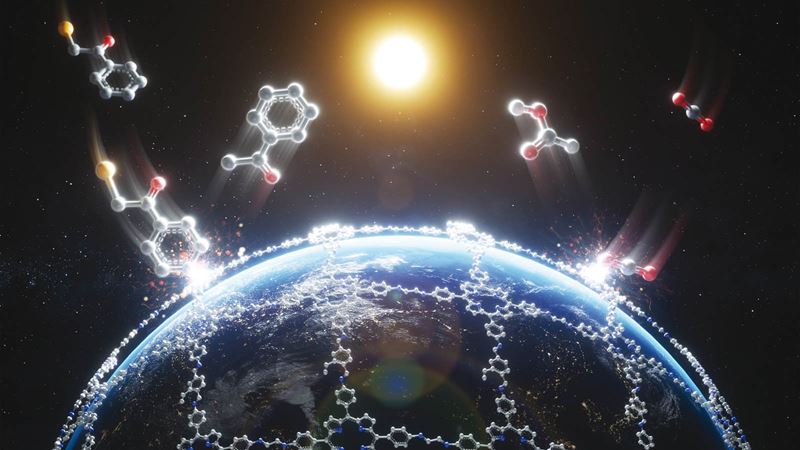
Read and publish in our themed collections
Journal of Materials Chemistry A publishes a number of themed collections every year, guest edited by members of the materials community on timely and important topics.
Read the latest themed collections, including the annual emerging investigator issues.
Interested in contributing your work? Explore the latest open calls for papers in materials science.
Journal scope
Journal of Materials Chemistry A, B & C cover high quality studies across all fields of materials chemistry. The journals focus on those theoretical or experimental studies that report new understanding, applications, properties and synthesis of materials. The journals have a strong history of publishing quality reports of interest to interdisciplinary communities and providing an efficient and rigorous service through peer review and publication. The journals are led by an international team of Editors-in-Chief and Associate Editors who are all active researchers in their fields.
Journal of Materials Chemistry A, B & C are separated by the intended application of the material studied. Broadly, applications in energy and sustainability are of interest to Journal of Materials Chemistry A, applications in biology and medicine are of interest to Journal of Materials Chemistry B, and applications in optical, magnetic and electronic devices are of interest to Journal of Materials Chemistry C. More than one Journal of Materials Chemistry journal may be suitable for certain fields and researchers are encouraged to submit their paper to the journal that they feel best fits for their particular article.
Example topic areas within the scope of Journal of Materials Chemistry A are listed below. This list is neither exhaustive nor exclusive.
- Artificial photosynthesis
- Batteries
- Carbon dioxide conversion
- Catalysis
- Fuel cells
- Gas capture/separation/storage
- Green/sustainable materials
- Hydrogen generation
- Hydrogen storage
- Photocatalysis
- Photovoltaics
- Self-cleaning materials
- Self-healing materials
- Sensors
- Supercapacitors
- Thermoelectrics
- Water splitting
- Water treatment
Journal of Materials Chemistry Lectureship Award
This Lectureship recognises early career researchers, typically within 10 years of attaining their PhD or equivalent degree OR within the first five years of their independent career, who have made significant contributions to the field of materials chemistry.
This award is presented annually. Nominations open in the spring, and the winner is announced in the autumn.
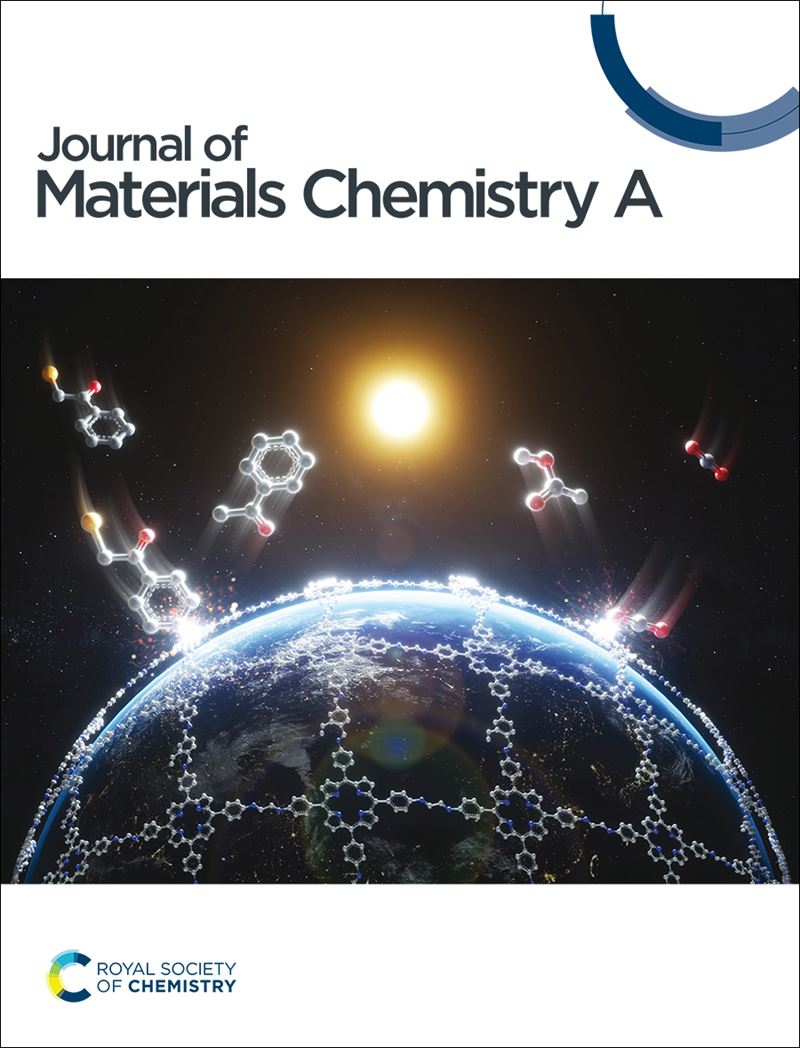
The Lectureship recipient receives £1,000 to cover travel and accommodation costs to attend and present at a leading international meeting. They are also invited to contribute an article to one of the Journal of Materials Chemistry journals and to receive a complimentary cover for the issue in which the article appears.
You can read about eligibility, how to nominate, see deadlines and all of the award winners.
Find out more
See who's on the team
Meet Journal of Materials Chemistry A's Editor-in-Chief and board members.
Editor-in-chief
Anders Hagfeldt, Uppsala University, Sweden
Scientific Editors
Serena Cussen, University College Dublin, Republic of Ireland
Frank Osterloh, University of California, Davis, USA
Xiaowei Zhan, Peking University, China
Associate editors
Veronica Augustyn, North Carolina State University, USA
Viola Birss, University of Calgary, Canada
Ghim Wei Ho, National University of Singapore, Singapore
Yun Jeong Hwang, Seoul National University, South Korea
Kisuk Kang, Seoul National University, South Korea
Subrata Kundu, Central Electrochemical Research Institute (CECRI), India
Dan Li, Jinan University, China
Yi-Chun Lu, The Chinese University of Hong Kong, Hong Kong SAR, China
Jennifer Rupp, Technical University Munich, Germany
Miriam Unterlass, University of Konstanz, Germany
Lydia Helena Wong, Nanyang Technological University, Singapore
Li-Zhu Wu, Technical Institute of Physics and Chemistry, China
Yusuke Yamauchi, The University of Queensland, Australia
Zhen Zhou, Nankai University, China
Philipp Adelhelm, Humboldt-University Berlin, Germany
Rajeev Ahuja, Uppsala University, Sweden
Conchi Ania, CNRS Orleans, France
Jong-Beom Baek, Ulsan National Institute of Science and Technology, Korea
Sayan Bhattacharyya, Indian Institute of Science Education and Research (IISER) Kolkata, India
Kanishka Biswas, Jawaharlal Nehru Centre for Advanced Scientific Research, India
Curtis Berlinguette, University of British Columbia, Canada
Edith Bucher, University of Leoben, Austria
Michael Chabinyc, University of California, Santa Barbara, USA
Arun Chattopadhyay, IIT Guwahati, India
Jie-Sheng Chen, Shanghai Jiao Tong University, China
Will Chueh, Stanford University, USA
Xiaoguang Duan, University of Adelaide, Australia
Mohamed Eddaoudi, King Abdullah University of Science and Technology, Saudi Arabia
Tomas Edvinsson, Uppsala University, Sweden
Xinliang Feng, Dresden University of Technology, Germany
Ana Flavia Nogueira, University of Campinas, Brazil
Jurgen Fleig, Vienna University of Technology, Austria
Mihaela Florea, University of Bucharest, Romania
Giulia Galli, University of Chicago, USA
Nuria Garcia-Araez, University of Southampton, UK
Giulia Grancini, University of Pavia, Italy
Jiaxing Huang, Northwestern University, USA
Hiroshi Imahori, Kyoto University, Japan
Tatsumi Ishihara, Kyushu University, Japan
Saiful Islam, University of Oxford, UK
Feng Jiao, University of Delaware, USA
Emma Kendrick, University of Birmingham, UK
Dong Ha Kim, Ewha Womens University, Korea
Bumjoon Kim, KAIST, Korea
Ulrike Kramm, TU Darmstadt, Germany
Yun Jung Lee, Hanyang University, Korea
Jing Li, Rutgers University, USA
Baohua Li, Tsinghua University, China
Zhiqun Lin, National University of Singapore, Singapore
Bettina Lotsch, Max Planck Institute for Solid State Research, Germany
David Lou, City University of Hong Kong, Hong Kong
Jingshan Luo, Nankai University, China
C. Buddie Mullins, University of Texas at Austin, USA
Arun K. Nandi, Indian Association for the Cultivation of Science, Kolkata, India
Linda Nazar, University of Waterloo, Canada
Markus Niederberger, University of Zurich, Switzerland
Chinedum Osuji, University of Pennsylvania, USA
Steve Parker, University of Bath, UK
Satish Patil, Indian Institute of Science, Bangalore, India
Shizhang Qiao, University of Adelaide, Australia
Zoe Schnepp, University of Birmingham, UK
Zongping Shao, Curtin University, Australia
Yuichi Shimakawa, Kyoto University, Japan
Stephen Skinner, Imperial College London, UK
Mihaela C. Stefan, University of Texas at Dallas, USA
Cheng-Yong Su, Sun Yat-Sen University, China
Shi-Gang Sun, Xiamen University, China
Venkataraman Thangadurai, University of Calgary, Canada
Magdalena Titirici, Imperial College London, UK
Seung Uk Son, Sungkyunkwan University, Korea
Eva Unger, Lund University, Sweden
Rose-Noelle Vannier, ENSC Lille, France
Mengye Wang, Sun Yat-Sen University, China
Min Wei, Beijing University of Chemical Technology, China
Emily Weiss, Northwestern University, USA
Charlotte Williams, University of Oxford, UK
Claire Xiong, Boise State University, USA
Yang Xu, University College London, UK
Yi-Jun Xu, Fuzhou University, China
Meidan Ye, Xiamen University, China
Qiang Zhang, Tsinghua University, China
George (X. S.) Zhao, Qingdao University, China
Gengfeng Zheng, Fudan University, China
Michaela Mühlberg, Executive Editor ORCID 0000-0002-3468-280X
Geraldine Hay, Deputy Editor
Jonathon Watson, Editorial Production Manager
Natalie Cotterell, Development Editor
Rose Wedgbury, Development Editor
Tom Williams, Senior Publishing Editor
Matthew Blow, Publishing Editor
Chris Dias, Publishing Editor
Hemna Fathima, Publishing Editor
Juan Gonzalez, Publishing Editor
Ellie Griffiths, Publishing Editor
Rob Hinde, Publishing Editor
Sam Howell, Publishing Editor
Clara Humann, Publishing Editor
Francesca Jacklin, Publishing Editor
Evie Karkera, Publishing Editor
Shruti Karnik, Publishing Editor
Tamara Kosikova, Publishing Editor
Brian Li, Publishing Editor
Sophie Mander, Publishing Editor
Sam Mansell, Publishing Editor
Carole Martin, Publishing Editor
Kirsty McRoberts, Publishing Editor
Yasmin Mehanna, Publishing Editor
Tiffany Rogers, Publishing Editor
Cat Schofield, Publishing Editor
Charu Storr-Vijay, Publishing Editor
Manman Wang, Publishing Editor
Ash Hyde, Editorial Assistant
Julie Ann Roszkowski, Publishing Assistant
Sam Keltie, Publisher, Journals, ORCID 0000-0002-9369-8414
Journal of Materials Chemistry Lectureship
This Lectureship recognises early career researchers, typically within 10 years of attaining their PhD or equivalent degree, who have made significant contributions to the field of materials chemistry in their independent academic career.
Find out more about eligibility, how to nominate and deadlines for nomination and announcement.
Find out moreEthical Requirements
Journal of Materials Chemistry A authors, editors, reviewers and published works are required to uphold the Royal Society of Chemistry’s ethical standards. The Royal Society of Chemistry is a member of Committee on Publication Ethics (COPE) and our ethical standards follow COPE’s core practices and best practice guidelines. In cases where these guidelines are breached or appear to be so, the Royal Society of Chemistry will consult with COPE.
When a study involves the use of live animals or human subjects, authors must include in the 'methods/experimental' section of the manuscript a statement that all experiments were performed in compliance with the author’s institute’s policy on animal use and ethics; where possible, details of compliance with national or international laws or guidelines should be included. The statement must name the institutional/local ethics committee which has approved the study; where possible, the approval or case number should be provided. A statement that informed consent was obtained for any experimentation with human subjects is required. Reviewers may be asked to comment specifically on any cases in which concerns arise.
For further guidance on author responsibilities and code of conduct, which apply to Journal of Materials Chemistry A and to all manuscripts submitted to Royal Society of Chemistry journals, please visit our author hub.
Peer Review and editorial process
All articles published in Journal of Materials Chemistry A are subject to peer review by experts in the field.
The peer review for all articles submitted to the journal consists of the following stages:
- Phase 1: Your manuscript is initially assessed by a team of professional Publishing Editors who have a wide range of scientific backgrounds, or by one of our internationally recognised Scientific Editors who are members of the journal’s Editorial Board and active researchers. They make an assessment of whether the manuscript may be suitable for the journal, based on the scope and very high significance and broad general interest criteria required for publication. Publishing and Scientific Editors are supported in this decision-making by our academic Associate Editors who are also members of our Editorial Board and active researchers in the field.
- Phase 2: If the manuscript passes the initial assessment process, a Publishing Editor or Associate Editor solicits recommendations from at least two reviewers who are experts in the field. They will provide a report along with their recommendation.
- Phase 3: The editor handling your manuscript makes a decision based on the reviewer reports received. In the event that no clear decision can be made, another reviewer will be consulted.
Journal of Materials Chemistry A is committed to a rigorous peer review process and expert editorial oversight for all published content. Please refer to our processes and policies for full details including our appeals procedure.
Open access publishing options
Journal of Materials Chemistry A is a hybrid (transformative) journal and gives authors the choice of publishing their research either via the traditional subscription-based model or instead by choosing our gold open access option. Find out more about our Transformative Journals. which are Plan S compliant.
Gold open access
For authors who want to publish their article gold open access, Journal of Materials Chemistry A charges an article processing charge (APC) of £2,750 (+ any applicable tax). Our APC is all-inclusive and makes your article freely available online immediately, permanently, and includes your choice of Creative Commons licence (CC BY or CC BY-NC) at no extra cost. It is not a submission charge, so you only pay if your article is accepted for publication.
Learn more about publishing open access.
Read & Publish
If your institution has a Read & Publish agreement in place with the Royal Society of Chemistry, APCs for gold open access publishing in Journal of Materials Chemistry A may already be covered.
Use our journal finder to check if your institution has an open access agreement with us.
Please use your official institutional email address to submit your manuscript and check you are assigned as the corresponding author; this helps us to identify if you are eligible for Read & Publish or other APC discounts.
Traditional subscription model
Authors can also publish in Journal of Materials Chemistry A via the traditional subscription model without needing to pay an APC. Articles published via this route are available to institutions and individuals who subscribe to the journal. Our standard licence allows you to make the accepted manuscript of your article freely available after a 12-month embargo period. This is known as the green route to open access.
Readership information
Journal of Materials Chemistry A is a core journal for academic and industrial scientists involved in materials research.
Subscription information
Journal of Materials Chemistry A is part of RSC Gold, Core Chemistry and Materials Science subscription packages.
Online only 2024: ISSN 2050-7496 £2,047 / $4,248
*2022 Journal Citation Reports (Clarivate Analytics, 2023)
**The median time from submission to first decision including manuscripts rejected without peer review from the previous calendar year
***The median time from submission to first decision for peer-reviewed manuscripts from the previous calendar year
Journal of Materials Chemistry A
- Email:
- Send us an email
- Email:
- Send us an email
Share
Advertisement