

You can find details about how to access information remotely in this step-by-step guide. The guide will also help if for any reason you have difficulty accessing the content you want.
What would you like to know about this journal?
Nanoscale is a Transformative Journal and Plan S compliant
Impact factor: 6.7*
Time to first decision (all decisions): 11.0 days**
Time to first decision (peer reviewed only): 37.0 days***
Editors-in-chief: Dirk Guldi, Yue Zhang
Open access publishing options available
Read and publish in our themed collections
Nanoscale publishes a number of themed collections every year, guest edited by members of the nanoscience community on timely and important topics.
Read the latest themed collections, including the annual emerging investigator issues.
Interested in contributing your work? Explore the latest open calls for papers in nanoscience.
Journal scope
Nanoscale is a high-impact international journal, publishing high-quality research across nanoscience and nanotechnology. Nanoscale publishes a full mix of research articles on experimental and theoretical work, including reviews, communications, and full papers.
Highly interdisciplinary, Nanoscale appeals to scientists, researchers and professionals interested in nanoscience and nanotechnology, quantum materials and quantum technology, including the areas of physics, chemistry, biology, medicine, materials, energy/environment, information technology, detection science, healthcare and drug discovery, and electronics.
For publication in Nanoscale, papers must report high-quality reproducible new work that will be of significant general interest to the journal's wide international readership.
Nanoscale is a collaborative venture between the Royal Society of Chemistry Publishing and a leading nanoscience research centre, the National Center for Nanoscience and Technology (NCNST) in Beijing, China.
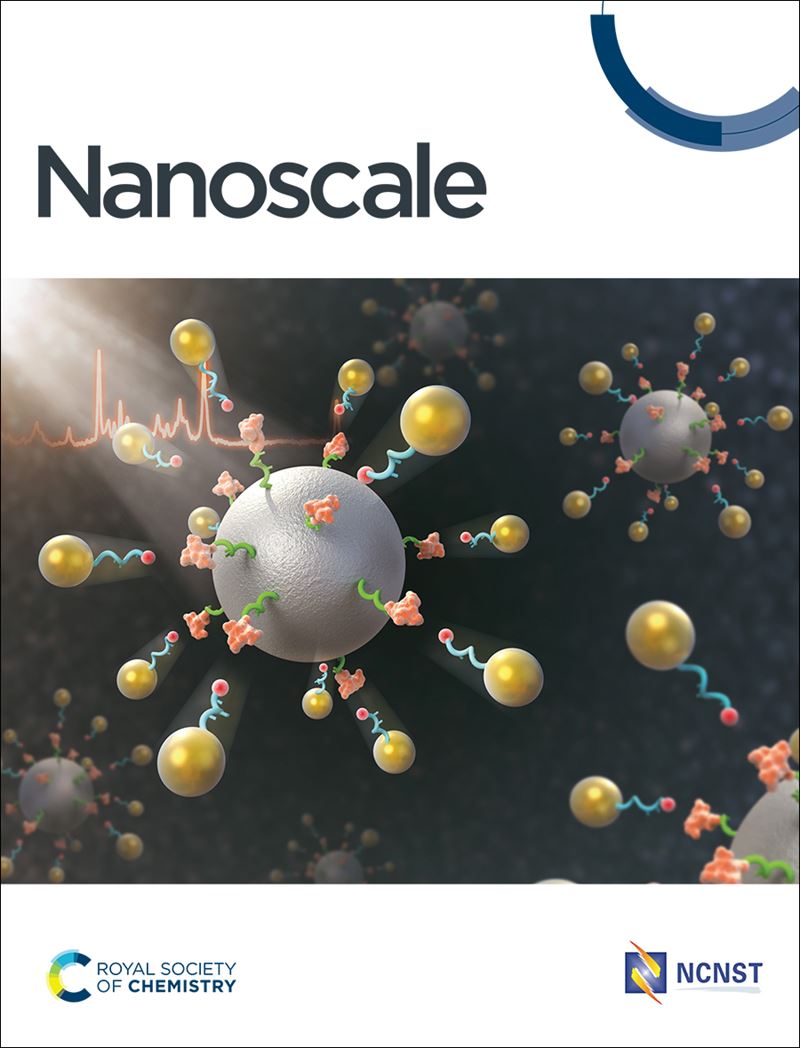
The journal publishes weekly issues, complementing and building on the nano content already published across the Royal Society of Chemistry Publishing journal portfolio.
Since its launch in late 2009, Nanoscale has established itself as a platform for high-quality, cross-community research that bridges the various disciplines involved with nanoscience and nanotechnology, publishing important research from leading international research groups.
Topics covered in the journal include, but are not limited to:
- Synthesis of nanostructured and nanoscale materials
- Quantum materials
- 2D materials
- Layered materials
- Layered quantum materials
- Characterisation of functional nanoscale materials and bio-assemblies
- Properties of nanoscale materials
- Self-assembly and molecular organisation
- Complex hybrid nanostructures
- Nanocomposites, nanoparticles, nanocrystalline materials, and nanoclusters
- Nanotubes, molecular nanowires and nanocrystals
- Molecular nanoscience
- Nanocatalysis
- Theoretical modelling
- Single-molecules
- Plasmonics
- Nanoelectronics and molecular electronics
- Nanophotonics
- Nanochips, nanosensors, nanofluidics and nanofabrication
- Carbon-based nanoscale materials and devices
- Biomimetic materials
- Nanobiotechnology/bionanomaterials
- Nanomedicine
- Regulatory approaches and risk assessment
Submissions are initially assessed by the Editorial Office and taken through peer-review by our high-profile associate editors.
Part of the nanoscale family
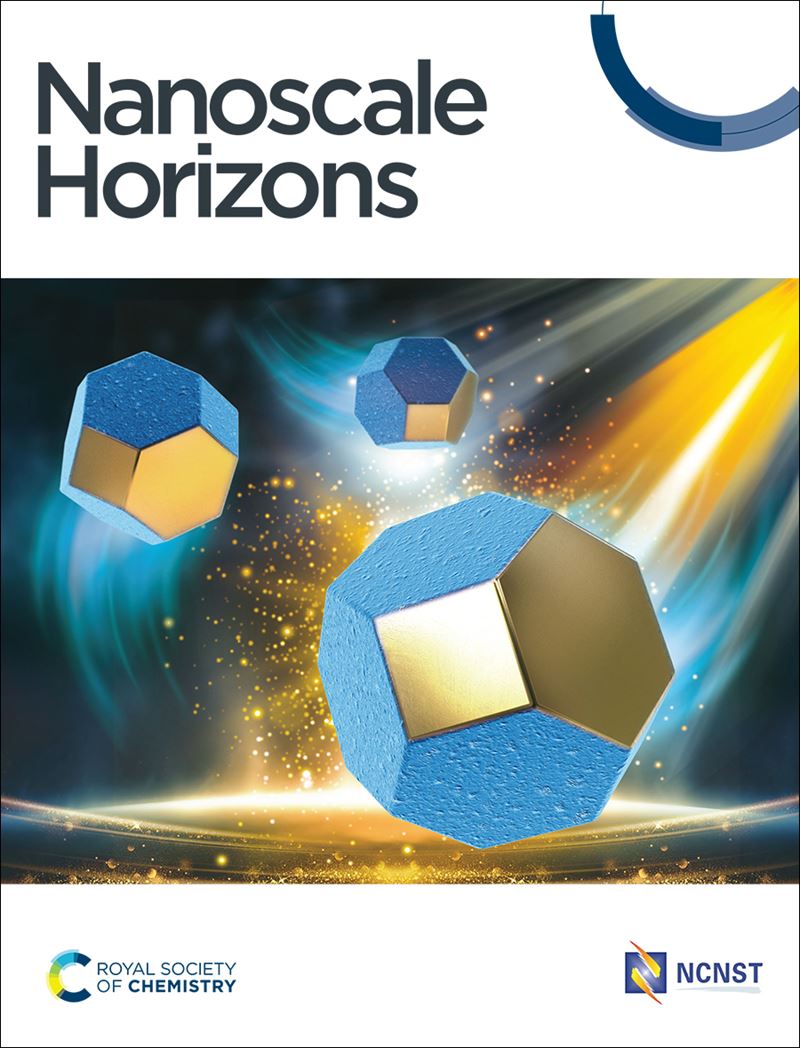
Nanoscale is part of the nanoscale family, which also includes Nanoscale Horizons and Nanoscale Advances. The journal series allows full coverage of interdisciplinary advances in nanoscience and nanotechnology.
Meet the team
Find out who is on the editorial and advisory boards for the Nanoscale journal.
Honorary Editor-in-chief
Chunli Bai, Institute of Chemistry, Chinese Academy of Sciences, China
Editors-in-chief
Dirk Guldi, Friedrich-Alexander-Universität Erlangen-Nürnberg, Germany
Yue Zhang, University of Science and Technology Beijing, China
Associate editors
Gianaurelio (Giovanni) Cuniberti, TU Dresden, Germany
Qing Dai, National Center for Nanoscience and Technology of China, China
Yves Dufrêne, Université Catholique de Louvain, Belgium
Andrea Ferrari, University of Cambridge, UK
Eva Hemmer, University of Ottawa, Canada
Dong Ha Kim, Ewha Womans University, Korea
Christian Klinke, University of Rostock, Germany
Quan Li, Chinese University of Hong Kong, Hong Kong
Zhiqun Lin, National University of Singapore, Singapore
Renzhi Ma, National Institute for Materials Science (NIMS), Japan
Janet Macdonald, Vanderbilt University, USA
Teresa Pellegrino, Istituto Italiano di Tecnologia, Italy
Elena Shevchenko, Argonne National Laboratory, USA
Nguyễn T K Thanh, University College London, UK
Jonathan Veinot, University of Alberta, Canada
Umesh Waghmare, Jawaharlal Nehru Centre for Advanced Scientific Research, India
Jinlan Wang, Southeast University, China
Manzhou Zhu, Anhui University, China
Jin Zou, University of Queensland, Australia
Zhenan Bao, Stanford University, USA
Amanda Barnard, Australian National University, Australia
Suryasarathi Bose, Indian Institute of Science Bangalore, India
Stephanie Brock, Wayne State, Chemistry, USA
Raffaella Buonsanti, EPFL, Switzerland
Cinzia Casiraghi, University of Manchester, UK
Chunying Chen, National Center for Nanoscience and Technology of China, China
Jingyi Chen, University of Arkansas, USA
Xiaodong Chen, Nanyang Technological University, Singapore
Wenlong Cheng, The University of Sydney, Australia
Serena Cussen, University of Sheffield, UK
Mita Dasog, Dalhousie University, Canada
Mingdong Dong, Aarhus University, Denmark
Kristen Fichthorn, Penn State, Chemical Engineering, USA
Christy Haynes, University of Minnesota, USA
Niko Hildebrandt, McMaster University / Seoul National University, Canada / South Korea
Guohua Jia, Curtin University, Australia
Xingyu Jiang, Southern University of Science and Technology, China
RongChao Jin, Carnegie Mellon University, USA
Song Jin, University of Wisconsin, USA
Jesse Jokerst, UCSD, USA
Kourosh Kalantar-Zadeh, The University of Sydney, Australia
Yamuna Krishnan, University of Chicago, USA
Katharina Landfester, Max Planck Institute for Polymer Research, Germany
Dattatray Late, CSIR National Chemical Laboratory, India
Pooi See Lee, Nanyang Technological University, Singapore
Graham Leggett, University of Sheffield, UK
Changming Li, Southwest University, China
Xing Yi Ling, Nanyang Technological University, Singapore
Jie Liu, Duke University, USA
Laura Na Liu, Max Planck Institute for Intelligent Systems, Germany
Xiaogang Liu, National University of Singapore, Singapore
Yunqi Liu, Chinese Academy of Sciences, China
Wei Lu, University of Michigan, USA, University of Michigan, USA
Liberato Manna, Istituto Italiano di Tecnologia, Italy
Anna Fontcuberta i Morral, EPFL, Switzerland
Catherine Murphy, University of Illinois at Urbana-Champaign, USA
Kostya (Ken) Ostrikov, Queensland University of Technology, Australia
So-Jung Park, Ewha Womans University, Korea
Lakshminarayana Polavarapu, University of Vigo, Spain
T Pradeep, Indian Institute of Technology Madras, India
Narayan Pradhan, Indian Association for the Cultivation of Science, India
Dong Qin, Georgia Institute of Technology, USA
Michael Sailor, University of California, San Diego, USA
Paolo Samorì, Université de Strasbourg, France
Hyeon Suk Shin, Ulsan National Institute of Science and Technology, South Korea
Zhigang Shuai, Tsinghua University, China
Sara Skrabalak, Indiana University, USA
Francesco Stellacci, École polytechnique fédérale de Lausanne, Switzerland
Hong-Bo Sun, Tsinghua University, China
Lingdong Sun, Peking University, China
Shouheng Sun, Brown University, USA
Xiaoming Sun, Beijing University of Chemical Technology, China
Dmitri Talapin, University of Chicago, USA
Zhiyong Tang, National Center for Nanoscience and Technology, China
Mauricio Terrones, The Pennsylvania State University, USA
Sarah Tolbert, University of California, Los Angeles, USA
Ventsislav Valev, University of Bath, UK
Miriam Vitiello, CNR Nano, Italy
Jianfang Wang, The Chinese University of Hong Kong, Hong Kong SAR
Benjamin Wiley, Duke University, USA
Xiaojun Wu, University of Science and Technology of China, China
Yujie Xiong, University of Science and Technology of China, China
Hongxing Xu, Wuhan University, China
Lin Xu, Nanjing Normal University, China
Ya Yang, Beijing Institute of Nanoenergy and Nanosystems, Chinese Academy of Sciences, China
Jinhua Ye, National Institute for Materials Science, Japan
Xiao Cheng Zeng, University of Nebraska-Lincoln, USA
Gang Zhang, Institute of High Performance Computing, ASTAR, Singapore
Hua Zhang, City University of Hong Kong, China
Miqin Zhang, University of Washington, USA
Yuliang Zhao, National Center for Nanoscience and Technology, China
Michaela Mühlberg, Executive Editor ORCID 0000-0002-3468-280X
Heather Montgomery, Managing Editor ORCID 0000-0002-3241-2785
Jonathon Watson, Editorial Production Manager
Ella White, Senior Publishing Editor
Edward Gardner, Development Editor
Matthew Blow, Publishing Editor
Chris Dias, Publishing Editor
Juan Gonzalez, Publishing Editor
Eleanor Griffiths, Publishing Editor
Rob Hinde, Publishing Editor
Sam Howell, Publishing Editor
Clara Humann, Publishing Editor
Francesca Jacklin, Publishing Editor
Evie Karkera, Publishing Editor
Shruti Karnik, Publishing Editor
Sophie Mander, Publishing Editor
Tamara Kosikova, Publishing Editor
Brian Li, Publishing Editor
Sam Mansell, Publishing Editor
Carole Martin, Publishing Editor
Kirsty McRoberts, Publishing Editor
Yasmin Mehanna, Publishing Editor
Tiffany Rogers, Publishing Editor
Cat Schofield, Publishing Editor
Charu Storr-Vijay, Publishing Editor
Manman Wang, Publishing Editor
Elizabeth So, Editorial Assistant
Jie Gao, Assistant Editor
Sam Keltie, Publisher, Journals, ORCID 0000-0002-9369-8414
Ethical Requirements
Nanoscale authors, editors, reviewers and published works are required to uphold the Royal Society of Chemistry’s ethical standards. The Royal Society of Chemistry is a member of the Committee on Publication Ethics (COPE) and our ethical standards follow COPE’s core practices and best practice guidelines. In cases where these guidelines are breached or appear to be so, the Royal Society of Chemistry will consult with COPE.
When a study involves the use of live animals or human subjects, authors must include in the 'methods/experimental' section of the manuscript a statement that all experiments were performed in compliance with the author’s institute’s policy on animal use and ethics; where possible, details of compliance with national or international laws or guidelines should be included. The statement must name the institutional/local ethics committee which has approved the study; where possible, the approval or case number should be provided. A statement that informed consent was obtained for any experimentation with human subjects is required. Reviewers may be asked to comment specifically on any cases in which concerns arise.
For further guidance on author responsibilities and code of conduct, which apply to Nanoscale and to all manuscripts submitted to Royal Society of Chemistry journals, please visit our author hub.
Peer Review and editorial process
All articles published in Nanoscale are subject to external peer review by experts in the field.
The peer review for all articles submitted to the journal consists of the following stages:
- Phase 1: Your manuscript is initially assessed by a team of professional Publishing Editors who have a wide range of scientific backgrounds. They make an assessment of whether the manuscript may be suitable for the journal, based on the scope and very high significance and broad general interest criteria required for publication. Publishing Editors are supported in this decision-making by our team of internationally recognised Associate Editors who are members of our Editorial Board and active researchers in the field.
- Phase 2: If the manuscript passes the initial assessment process, the associate editor solicits recommendations from at least two reviewers who are experts in the field. They will provide a report along with their recommendation.
- Phase 3: The associate editor handling your manuscript makes a decision based on the reviewer reports received. In the event that no clear decision can be made, another reviewer will be consulted.
Nanoscale is committed to a rigorous peer review process and expert editorial oversight for all published content. Please refer to our processes and policies for full details including our appeals procedure.
Journal guidelines
For general guidance on preparing an article please visit our Prepare your article page, Resources for authors and Experimental data guidelines pages, the content of which is relevant to all our journals. Please note the updated guidelines for electrophoretic gels and blots. Please note the RSC does not require authors to submit using a specific template, but there are templates available if you wish to use them.
To learn more about the Royal Society of Chemistry's policies and processes, including licensing, peer review and formatting, please refer to our Resources for authors page.
Open access publishing options
Nanoscale is a hybrid (transformative) journal and gives authors the choice of publishing their research either via the traditional subscription-based model or instead by choosing our gold open access option. Find out more about our Transformative Journals. which are Plan S compliant.
Gold open access
For authors who want to publish their article gold open access, Nanoscale charges an article processing charge (APC) of £2,750 (+ any applicable tax). Our APC is all-inclusive and makes your article freely available online immediately, permanently, and includes your choice of Creative Commons licence (CC BY or CC BY-NC) at no extra cost. It is not a submission charge, so you only pay if your article is accepted for publication.
Learn more about publishing open access.
Read & Publish
If your institution has a Read & Publish agreement in place with the Royal Society of Chemistry, APCs for gold open access publishing in Nanoscale may already be covered.
Please use your official institutional email address to submit your manuscriptand check you are assigned as the corresponding author; this helps us to identify if you are eligible for Read & Publish or other APC discounts.
Traditional subscription model
Authors can also publish in Nanoscale via the traditional subscription model without needing to pay an APC. Articles published via this route are available to institutions and individuals who subscribe to the journal. Our standard licence allows you to make the accepted manuscript of your article freely available after a 12-month embargo period. This is known as the green route to open access.
Subscription information
Nanoscale is part of RSC Gold and Materials Science subscription packages.
Online only 2024: ISSN 2040-3372, £2,014 / $3,282
*2022 Journal Citation Reports (Clarivate Analytics, 2023)
**The median time from submission to first decision including manuscripts rejected without peer review from the previous calendar year
***The median time from submission to first decision for peer-reviewed manuscripts from the previous calendar year
Nanoscale
- Email:
- Send us an email
- Email:
- Send us an email
Share
Advertisement