


Your unique discoveries deserve to be celebrated. We are a home to world-leading interdisciplinary research from every aspect of the chemical sciences. We offer an open and trusted venue for your articles to flourish, and we are not afraid of publishing research that goes beyond the ordinary.
Chemical Science has a broad remit. We want bold papers that really challenge the status quo. So if you think something’s particularly controversial, new or exciting – well, that’s exactly the kind of paper we want.
What would you like to know about Chemical Science?
Impact factor: 8.4*
Time to first decision (all decisions): 7.0 days**
Time to first decision (peer reviewed only): 33.0 days***
Editor-in-Chief: Andrew Cooper
Indexed in Web of Science (Science Citation Index), Scopus, PubMed Central (PMC) and the Directory of Open Access Journals (DOAJ)




Featured articles
Chemistry must respond to the crisis of transgression of planetary boundaries
Recent assessments alarmingly indicate that many of the world's leading chemicals are transgressing one or more of the nine planetary boundaries, which define safe operating spaces within which humanity can continue to develop and thrive for generations to come.
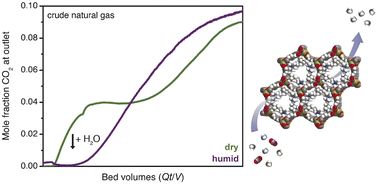
A cooperative adsorbent for the switch-like capture of carbon dioxide from crude natural gas
Natural gas constitutes a growing share of global primary energy due to its abundant supply and lower CO2 emission intensity compared to coal.
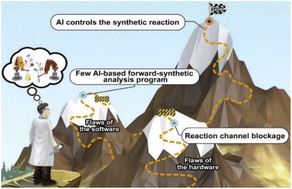
The Way of AI-Controlled Synthesis: How Long Do We Need to Go?
Chemical synthesis always plays an irreplaceable role in chemical, materials, and pharmacological fields.
What is in scope?
Our journal has a wide-ranging scope which covers the full breadth of the chemical sciences. The research we publish contains the sorts of novel ideas, challenging questions and progressive thinking that bring undiscovered breakthroughs within reach.
Your paper could focus on a single area, or cross many. It could be beyond the accepted bounds of the chemical sciences. It might address an immediate challenge, contribute to a future breakthrough or be wholly conceptual.
We’re a team from every field of the chemical sciences, and know from experience that breakthroughs that drive the solutions to global challenges can come from anywhere, at any time. You could even start an entirely new area of research.
Too bold? Too progressive? No such thing
Who is on the team?
As a team, we ask challenging questions of ourselves as well as our authors. How do we offer a truly unbiased assessment of research? What can we do next to make submission even faster?
At Chemical Science, every manuscript is initially assessed by a team of professional editors who have a wide range of backgrounds from across the chemical sciences. The in-house team apply an initial screening of papers to ensure they meet the general interest and significant criteria of the journal. If a manuscript is considered potentially suitable then it is passed onto one of our Associate Editors who will then assess in more detail. If successful, then the Associate Editor will send onto reviewers.
Find out who is on the editorial and advisory boards below or learn more about how we assess papers.
How can we help?
- Email:
- send an email
Dave Adams, University of Glasgow, UK
Ayyappanpillai Ajayaghosh, NIIST, India
Rommie Amaro, University of California, San Diego, USA
Athina Anastasaki, ETH Zürich, Switzerland
Ulf-Peter Apfel, Ruhr-University Bochum, Germany
Knut Asmis, Leipzig University, Germany
Xinhe Bao, Dalian Institute of Chemical Physics, China
Zhenan Bao, Stanford University, USA
David. N. Beratan, Duke University, USA
Gonçalo Bernardes, University of Cambridge, UK
Frank Biedermann, Karlsruhe Institute of Technology, Germany
Donna Blackmond, Scripps Research Institute, USA
Eva Blasco, Heidelberg University, Germany
Jeffrey Bode, ETH Zürich, Switzerland
Professor Jennifer S. Brodbelt, University of Texas at Austin, USA
Christopher Chang, University of California, Berkeley, USA
Chi-Ming Che, University of Hong Kong, China
Jun Chen, Nankai University, China
Michael Cohen, Oregon Health & Science University (OHSU), USA
Connor Coley, MIT, USA
Josep Cornella, Max-Planck-Institut für Kohlenforschung, Germany
Leroy Cronin, University of Glasgow, UK
James Crowley, University of Otago, New Zealand
Christopher C. Cummins, Massachusetts Institute of Technology, USA
Viktoria Däschlein-Gessner, Ruhr University Bochum, Germany
Martina Delbianco, Max Planck Institute of Colloids and Interfaces, Germany
Jillian Dempsey, University of North Carolina at Chapel Hill, USA
William Dichtel, Northwestern University, USA
Kazunari Domen, University of Tokyo, Japan
Haohong Duan, Tsinghua University, China
Xinliang Feng, TU Dresden, Germany
Ben Feringa, University of Groningen, The Netherlands
Joshua Figueroa, University of California, San Diego, USA
Natia Frank, University of Nevada, USA
Marina Freitag, Newcastle University, UK
Song Gao, Peking University, China
Jeremiah Gassensmith, University of Texas at Dallas, USA
Gilles Gasser, Paris Science et Lettres University, France
Elizabeth Gibson, Newcastle University, UK
Robert J. Gilliard, Jr., Massachusetts Institute of Technology, USA
Frank Glorius, WWU Münster, Germany
Leticia González, University of Vienna, Austria
Duncan Graham, University of Strathclyde, UK
Vicki Grassian, University of California, San Diego, USA
Alexis Grimaud, Boston College, USA
Tanja Gulder, University of Leipzig, Germany
Will Gutekunst, Georgia Tech, USA
Itaru Hamachi, Kyoto University, Japan
Grace Han, Brandeis University, USA
Buxing Han, Chinese Academy of Sciences, China
Mahesh Hariharan, IISER, India
Christy Haynes, University of Minnesota, USA
Jennifer Heemstra, Washington University in St Louis, USA
Thomas Heine, Dresden Technical University, Germany
Patrick Holland, Yale University, USA
Kim E. Jelfs, Imperial College London, UK
Xiao Jiang, Aramco Research Center, USA
Yousung Jung, Seoul National University, South Korea
Stephanie Kath-Schorr, University of Cologne, Germany
Takashi Kato, University of Tokyo, Japan
Christopher Kelly, Janssen Research & Development, USA
Rebekka Klausen, Johns Hopkins University, USA
Yamuna Krishnan, University of Chicago, USA
Marina Kuimova, Imperial College London, UK
Kyle Lancaster, Cornell University, USA
Ai-Lan Lee, Heriot-Watt University, UK
Daniele Leonori, RWTH Aachen University, Germany
Xiasong Li, University of Washington, USA
Yi Li, Jilin University, China
Mi Hee Lim, KAIST, South Korea
Julio Lloret-Fillol, ICIQ, Spain
Bettina Lotsch, Max Planck Institute, Germany
Xiong Wen (David) Lou, NTU, Singapore
Kazuhiko Maeda, Tokyo Institute of Technology, Japan
Satoshi Maeda, Hokkaido University, Japan
Debabrata Maiti, IIT Bombay, India
Lara Malins, Australian National University, Australia
Swadhin Mandal, IISER Kolkata, India
Todd Martinez, Stanford University, USA
Carlos Martínez-Huitle, Federal University of Rio Grande do Norte, Brazil
Ellen Matson, University of Rochester, USA
José Luis Medina-Franco, National Autonomous University of Mexico, Mexico
Vicent Moliner, Institute of Advanced Materials (INAM), Jaume I University, USA
Wonwoo Nam, Ewha Womans University, Korea
Tim Noël, University of Amsterdam, Netherlands
Allie Obermeyer, Columbia University, USA
Martin Oestreich, Technische Universität Berlin, Germany
David O'Hagan, University of St Andrews, UK
Takashi Ooi, Nagoya University, Japan
Rachel O'Reilly, University of Birmingham, UK
Sascha Ott, Uppsala University, Sweden
Henrik Ottosson, Uppsala University, Sweden
Zheng Ouyang, Tsinghua University, China
Xiulian Pan, Dalian Institute of Chemical Physics, China
Satish Patil, Solid State and Structural Chemistry Unit (SSCU), Indian Institute of Science, India
Emily Pentzer, Texas A&M University, USA
Sebastian Peter, Jawaharlal Nehru Centre for Advanced Scientific Research, India
Warren Piers, University of Calgary, Canada
Nicolas Plumeré, Technical University of Munich, Germany
Shizhang Qiao, University of Adelaide, Australia
Vishal Rai, IISER Bhopal, India
Seth Rasmussen, North Dakota State University, USA
Javier Read de Alaniz, University of California Santa Barbara, USA
Erwin Reisner, University of Cambridge, UK
Andrea Rentmeister, WWU Münster, Germany
Jeffrey Rinehart, University of California, San Diego, USA
Adrian Roitberg, University of Florida, USA
Garry Rumbles, University of Colorado Boulder, USA
Haritz Sardon, University of the Basque Country, Spain
Richmond Sarpong, University of California, Berkeley, USA
George Schatz, Northwestern University, USA
Danielle Schultz, Merck, USA
Dwight Seferos, University of Toronto, Canada
Roberta Sessoli, University of Florence, Italy
Hannah Shafaat, UCLA, USA
Thomas Snaddon, Indiana University, USA
Miquel Solà, University of Girona, Spain
Galo Soler-Illia, Universidad Nacional de San Martin, Argentina
David Spring, University of Cambridge, UK
Brent Sumerlin, University of Florida, USA
Raghavan B. Sunoj, IIT Bombay, India
Yogesh Surendranath, MIT, USA
Mizuki Tada, Nagoya University, Japan
Tahei Tahara, RIKEN, Japan
Ben Zhong Tang, The Chinese University of Hong Kong, Shenzhen, China
Zhiyong Tang, National Center for Nanoscience and Nanotechnology, China
Simone Techert, Deutsches Elektronen-Synchrotron DESY, Germany
Christine Thomas, Ohio State University, USA
He Tian, East China University of Science & Technology, China
Zhong-Qun Tian, Xiamen University, China
Alexandre Tkatchenko, University of Luxembourg, Luxembourg
Helen Tran, University of Toronto, USA
Takashi Uemura, University of Tokyo, Japan
Christopher Vanderwal, University of California, Irvine, USA
Latha Venkataraman, Columbia University, USA
Gianvito Vilé, Politecnico di Milano, Italy
Atsushi Wakamiya, Kyoto University, Japan
Lai-Sheng Wang, Brown University, USA
Chu Wang, Peking University, China
Eranthee Weerapana, Boston College, USA
Julia Weinstein, University of Sheffield, UK
Tom Welton, Imperial College London, UK
Alison Wendlandt, Massachusetts Institute of Technology, USA
Charlotte Williams, University of Oxford, UK
Vivian Yam, University of Hong Kong, China
Nobuhiro Yanai, Kyushu University, Japan
Shao Q. Yao, National University of Singapore, Singapore
Aldo José Gorgatti Zarbin, Federal University of Paraná, Brazil
Liang Zhang, East China Normal University, China
Tierui Zhang, Technical Institute of Physics and Chemistry (TIPC), China
Jenny Zhang, University of Cambridge, UK
Zhi-Jian Zhao, Tianjin University, China
Qi-Lin Zhou, Nankai University, China
Chemical Science has a broad remit. We want bold papers that really challenge the status quo. So if you think something’s particularly controversial, new or exciting – well, that’s exactly the kind of paper we want.
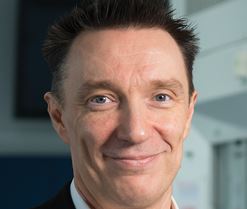
Editor-in-chief University of Liverpool, UK
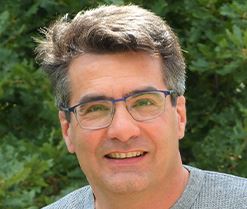
Associate Editor: Energy and bioinorganic chemistry University Grenoble Alpes & CEA, France
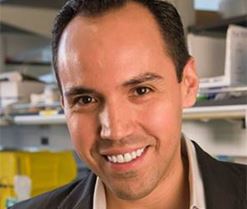
Associate Editor: Organic and Functional materials Columbia University, USA
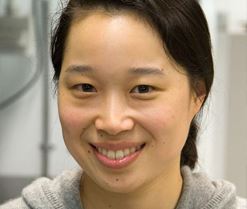
Associate Editor: Chemical Biology University of California at Berkeley, USA
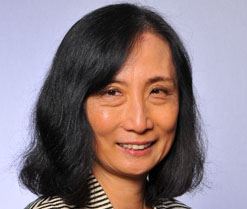
Associate Editor: Physical chemistry and photochemistry Northwestern University, USA
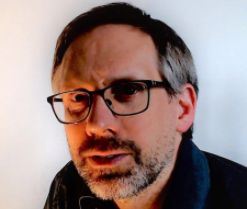
Associate Editor: Computational methods, machine learning and materials discovery University of Southampton, UK
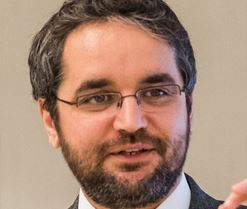
Associate Editor: MOFs and their applications MIT, USA
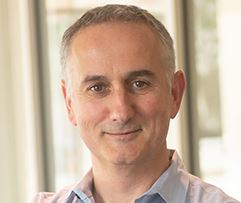
Associate Editor: Synthetic Inorganic Chemistry Texas A&M University, USA
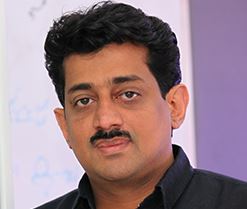
Associate Editor: Supramolecular Chemistry and Organic Materials Jawaharlal Nehru Centre for Advanced Scientific Research (JNCASR), India
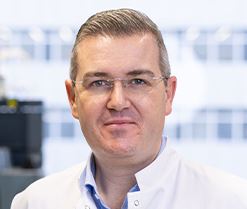
Associate Editor: Organic Chemistry University of Münster, Germany
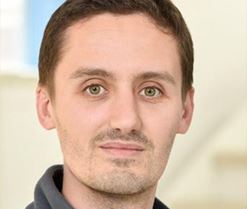
Associate Editor: Supramolecular chemistryUniversity of Birmingham, UK
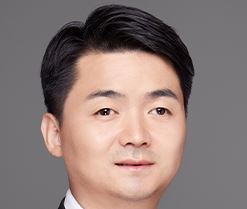
Associate Editor: Heterogeneous Catalysis Tianjin University, China
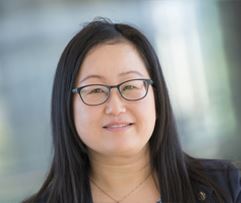
Associate Editor: Materials for energy storage and conversion, rechargeable batteries, hydrogen storage, and fuel cells The University of Adelaide, Australia
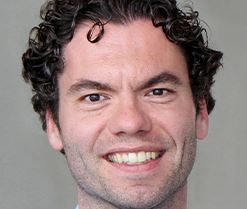
Associate Editor: Chemical Biology and Organic Chemistry Leibniz-Institut für Molekulare Pharmakologie and Humboldt Universität zu Berlin, Germany
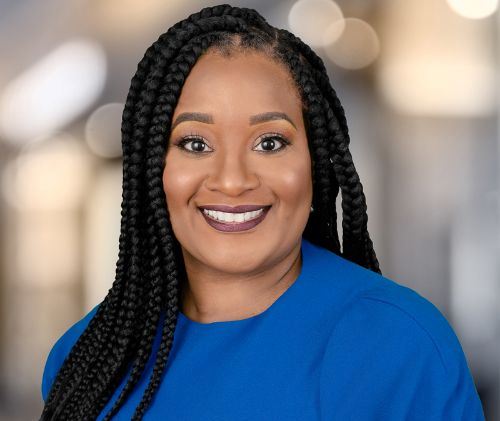
Associate Editor: Functional organic materials University of Boston, USA
Associate Editor: Organic Chemistry Peking University, China

Associate Editor: Polymer Chemistry Monash University, Australia
Associate Editor: Inorganic materials Stanford University, USA
Associate Editor: Chemical biology University of Freiburg, Germany
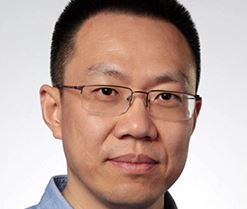
Associate Editor: Analytical science and electrochemistry Nanjing University, China
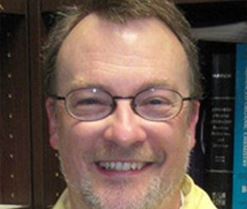
Associate Editor: Physical inorganic Michigan State University, USA
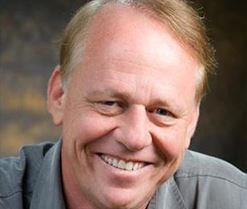
Associate Editor: Molecular imaging and biosensing Northwestern University, USA
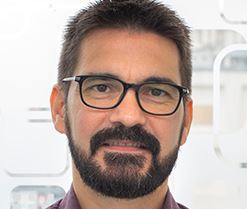
Associate Editor: Organic chemistryUniversity of Bologna, Italy
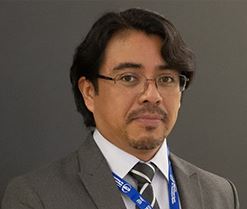
Associate Editor: Theoretical and computational Cinvestav Mérida, México
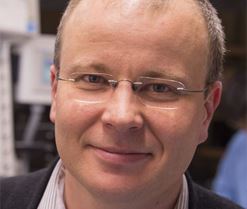
Associate Editor: Nanoscience and functional materials The University of Chicago, USA
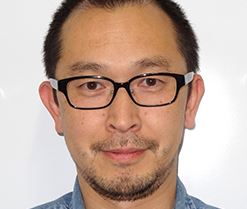
Associate Editor: Nanomaterials and photocatalysis Kyoto University, Japan
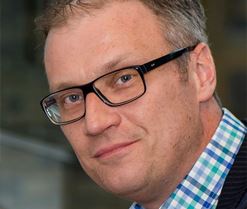
Associate Editor: Organic chemistry University of Toronto, Canada
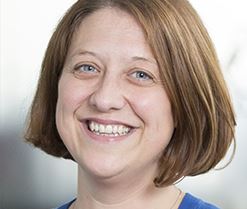
Executive Editor
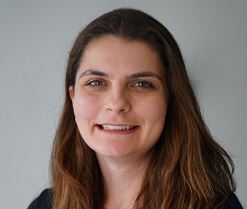
Deputy Editor
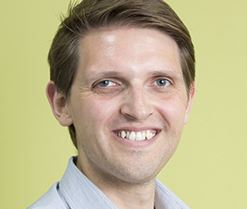
Senior Editor
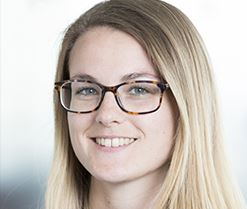
Scientific Editor
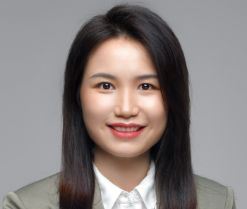
Scientific Editor
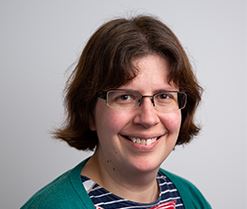
Scientific Editor

Scientific Editor
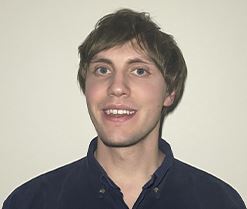
Scientific Editor

Scientific Editor
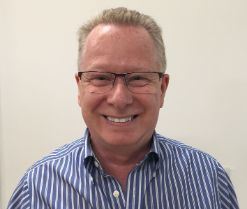
Editorial Assistant
Publishing Assistant
Access information
Since 2015 there are no submission, publication or article download charges for this journal.
All published articles are deposited with LOCKSS, CLOCKSS, Portico and the British Library for archiving.
We offer Chemical Science authors a choice of two Creative Commons licences, CC BY or CC BY NC. Publication under these licenses means that authors retain copyright of their article, but allows users to read, download, copy, distribute, print, search, or link to the full texts of articles, or use them for any other lawful purpose, without asking prior permission from the publisher or the author. Read our open access statement for further information.
To purchase 2010–2014 articles please contact our customer service and sales team.
Sales team
- Email:
- Send us an email
Online only: ISSN 2041-6539
Related journals
*2022 Journal Citation Reports (Clarivate Analytics, 2023)
**The median time from submission to first decision including manuscripts rejected without peer review from the previous calendar year
***The median time from submission to first decision for peer-reviewed manuscripts from the previous calendar year

Contact us
How can we help?
- Email:
- send an email
Share
Advertisement