
Green Chemistry
Cutting-edge research for a greener sustainable future.
Chair: Javier Pérez-Ramírez
Open Access: Hybrid

Green Chemistry provides a unique forum for the publication of innovative research on the development of alternative green and sustainable technologies.
ISSN: 1463-9270
Indexed in: Web of Science
Journal Impact factor
9.2 (2024)
First decision time (all)
8 days
First decision time (peer reviewed)
35 days
Scope
Green Chemistry provides a unique forum for the publication of innovative research on the development of alternative green and sustainable technologies.
The scope of Green Chemistry is based on, but not limited to, the definition proposed by Anastas and Warner (Green Chemistry: Theory and Practice, P T Anastas and J C Warner, Oxford University Press, Oxford, 1998). Green chemistry is the utilisation of a set of principles that reduces or eliminates the use or generation of hazardous substances in the design, manufacture and application of chemical products.
Green Chemistry is at the frontiers of this continuously-evolving interdisciplinary science and publishes research that attempts to reduce the environmental impact of the chemical enterprise by developing a technology base that is inherently non-toxic to living things and the environment. Submissions on all aspects of research relating to the endeavour are welcome.
The journal publishes original and significant cutting-edge research that is likely to be of wide general appeal. To be published, work must present a significant advance in green chemistry. Papers must contain a comparison with existing methods and demonstrate advantages over those methods before publication can be considered. For more information please see this Editorial.
Coverage includes the following, but is not limited to:
- Design (eg, biomimicry, design for degradation/recycling/reduced toxicity)
- Reagents & Feedstocks (eg, renewables, CO2, solvents, auxiliary agents, waste utilization)
- Synthesis (eg, organic, inorganic, synthetic biology…)
- Catalysis (eg, homogeneous, heterogeneous, enzyme, whole cell)
- Process (eg, process design, intensification, separations, recycling, efficiency)
- Energy (eg. renewable energy, fuels, photovoltaics, fuel cells, energy storage, energy carriers…)
- Applications (eg, electronics, dyes, consumer products, coatings, pharmaceuticals, preservatives, building materials, chemicals for industry/agriculture/mining)
- Impact (eg. safety, metrics, LCA, sustainability, (eco)toxicology)
Green chemistry is, by definition, a continuously-evolving frontier. Therefore, the inclusion of a particular material or technology does not, of itself, guarantee that a paper is suitable for the journal. To be suitable, the novel advance should have the potential for reduced environmental impact relative to the state of the art. Green Chemistry does not normally deal with research associated with 'end-of-pipe' or remediation issues.
Occasionally the Editors may decide to publish something outside the defined scope of the journal if the work would be of interest to the green chemistry community and/or have the potential to shape the field.
Readership
The journal appeals to a broad international readership spanning many communities, including all academic and industrial scientists interested in the development of alternative sustainable technologies.
Information for authors
Want to publish in this journal? Our author guidelines explain how to prepare and submit your article and provide useful information on the review and publication process including transfers, revisions and any article processing charges (APCs) that may apply.
You can read our payments and funding information for further details about APCs, which may apply for publishing open access in this journal, as well available discounts and waivers.
You may be able to publish open access in this journal, with no APC to pay, if your institution has an open access agreement with us. You can use our journal finder tool to check for agreements between us and your institution.
Meet the team
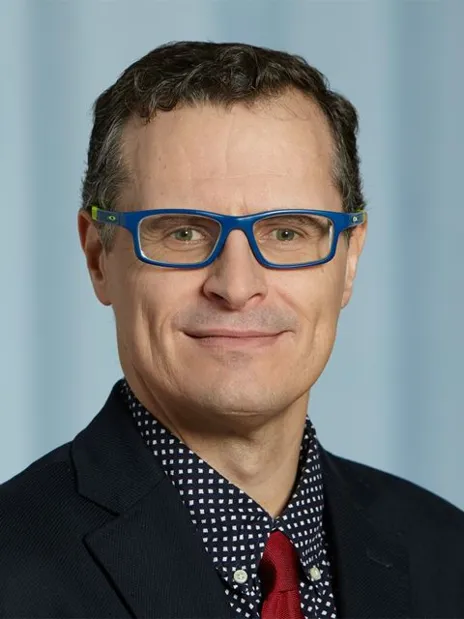
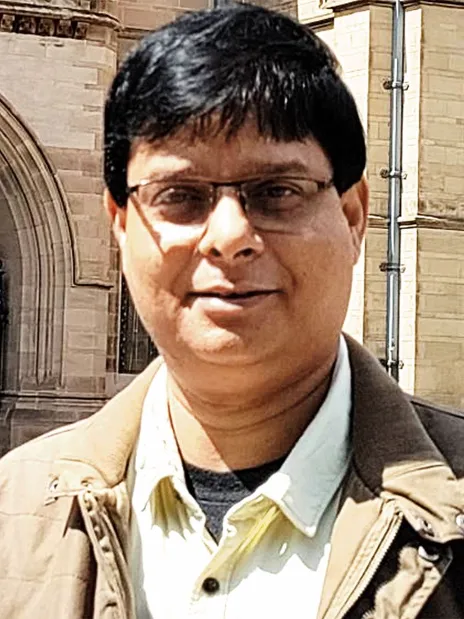




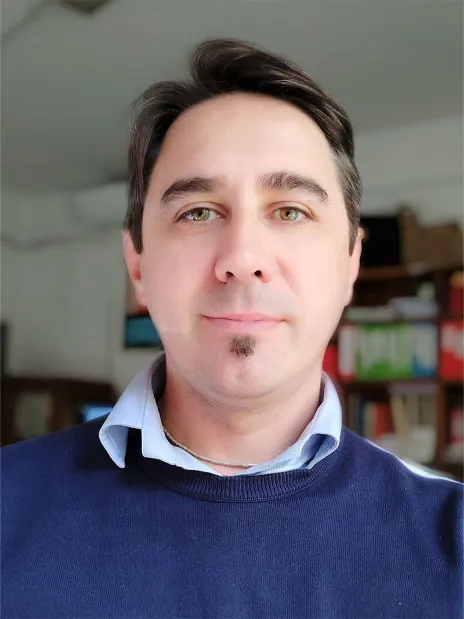

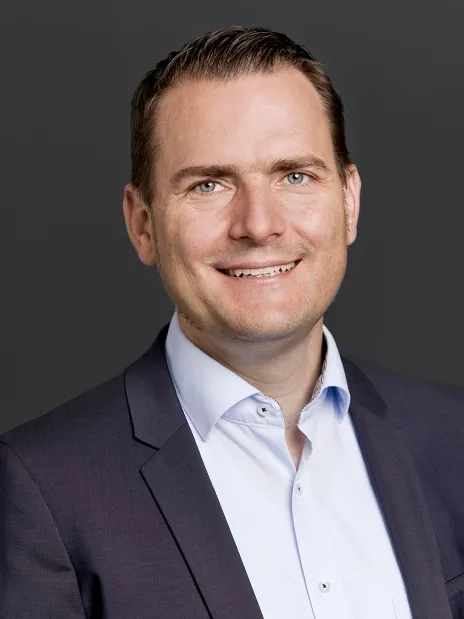

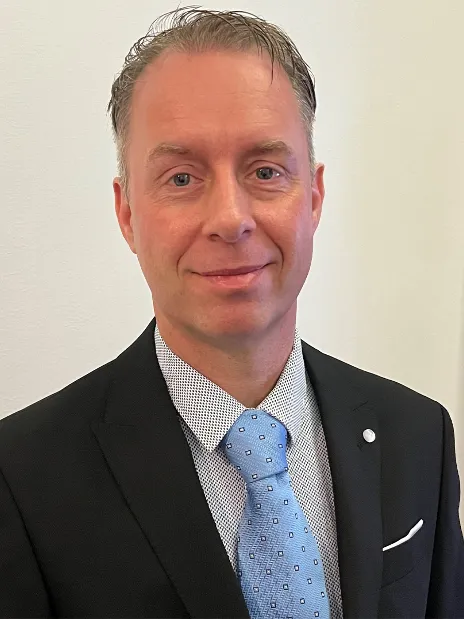




Paul Anastas
Yale University
Isabel Arends
Utrecht University
Katalin Barta
University of Graz
Gregg Beckham
NREL
Antonio Burtoloso
University of Sao Paulo
Sophie Carenco
Sorbonne University
Fabrizio Cavani
University of Bologna
Daniele Cespi
University of Bologna
Céline Chizallet
IFP Energies nouvelles
James Clark
University of York
Avelino Corma
Valencia University
Joao Coutinho
University of Aveiro
Robert H Crabtree
Yale University
James Dumesic
University of Wisconsin-Madison
Fabrice Gallou
Novartis AG
Karen Goldberg
University of Pennsylvania
Buxing Han
Chinese Academy of Sciences
Huan-Ming Huang
ShanghaiTech University
Andrew J. Hunt
Khon Kaen University
Graham Hutchings
Cardiff University
Francois Jérôme
University of Poitiers
Philip Jessop
Queen's University
C Oliver Kappe
University of Graz
Shu Kobayashi
The University of Tokyo
Burkhard Koenig
University of Regensburg
Michael Kopach
Lilly
Walter Leitner
RWTH Aachen University
Doug MacFarlane
Monash University
Regina Palkovits
RWTH Aachen
Alvise Perosa
Universita Ca Foscari
Martina Peters
Bayer AG
Martyn Poliakoff
University of Nottingham
Vivek Polshettiwar
Tata Institute of Fundamental Research (TIFR
Elsje Alessandra Quadrelli
CNRS and ESCPE Lyon
Colin Raston
Flinders University
Robin D Rogers
McGill University
Theresa Schoetz
University of Illinois Urbana-Champaign
Roger Sheldon
Delft University of Technology
Helen Sneddon
University of York
Christian Stevens
Ghent University
Natalia Tarasova
Mendeleev University of Chemical Technology
Magdalena Titirici
Imperial College London
Rajender Varma
US Environmental Protection Agency
Gianvito Vilé
Politecnico di Milano
Xiaonan Wang
Tsinghua University
Kevin C. W. Wu
National Taiwan University
G D Yadav
Institute of Chemical Technology
Tao Zhang
Dalian Institute of Chemical Physics
Julie Beth Zimmerman
Yale School of Engineering and Applied Sciences
Vânia Zuin Zeidler
Institute of Sustainable Chemistry Faculty/School of Sustainability
Huiyuan Zhu
University of Virginia
Michael A. Rowan
Executive Editor
Edward Gardner
Deputy Editor
Bee Hockin
Development Editor
Andrea Carolina Ojeda-Porras
Development Editor
Sam Keltie
Publisher
Gisela Scott
Editorial Manager
Chris Goodall
Associate Editorial Manager
Catherine Au
Publishing Editor
Isobel Darlington
Publishing Editor
Konoya Das
Publishing Editor
Alexandre Dumon
Publishing Editor
Charley James
Publishing Editor
Amy Lucas
Publishing Editor
Kieran Nicholson
Publishing Editor
Rini Prakash
Publishing Editor
Daphne Houston
Editorial Assistant
Robert Griffiths
Publishing Assistant
Read this journal

Paper
Tailoring the extraction process and properties of polysaccharides from the lichen Evernia prunastri using natural eutectic solvents following a biorefinery approach
Paper
Solvent-promoted catalyst-free aminolytic degradation for chemical recycling of single and mixed plastic wastes
Paper
A microbial factory for bio-indigo synthesis: demonstration of sustainable denim dying
Tutorial review
Developing and improving enzyme-driven technologies to synthesise emerging prebiotics
More from this journal
Contact the journal team
We're here to help. Contact the journal team if you have any questions about publishing your paper with us.
Sign up for journal email alerts
Get table of contents alerts and notifications about calls for papers, themed issues and more.