
Soft Matter
An interdisciplinary journal focusing on innovative soft matter topics through original research and reviews.
Editor-in-Chief: Alfred Crosby
Open Access: Hybrid
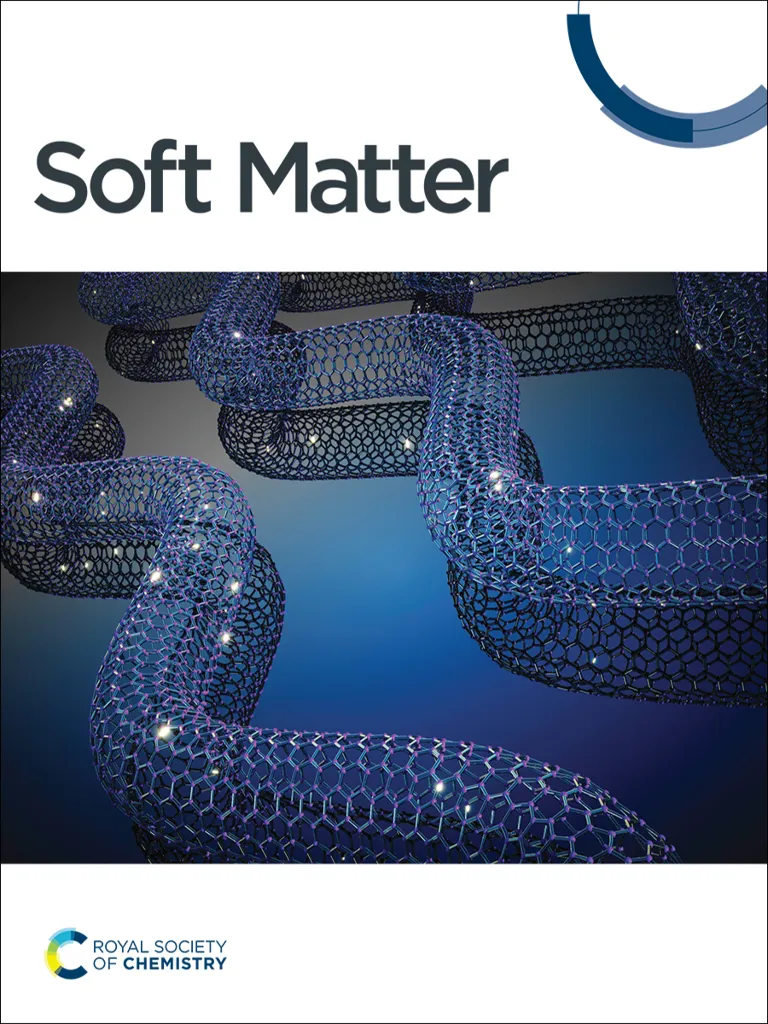
Soft Matter provides a unique forum for the communication of significant advances in interdisciplinary soft matter research. There is a particular focus on the interface between chemistry, physics, materials science, biology and chemical engineering.
ISSN 1744-6848
Indexed in: MEDLINE
Journal Impact factor
2.8 (2024)
First decision time (all)
29 days
First decision time (peer reviewed)
35 days
Scope
Research may report new soft materials or phenomena, encompass their design, synthesis, and use in new applications; or provide fundamental insight and observations on their behaviour. Experimental, theoretical and computational soft matter approaches are encouraged.
The scope of Soft Matter covers the following.
- Soft matter assemblies, including colloids, granular matter, liquid crystals, gels & networks, polymers, hybrid materials, active matter and further examples
- Soft nanotechnology, soft robotics and devices
- Synthesis, self-assembly and directed assembly
- Biological aspects of soft matter including proteins, biopolymers, cells and tissues
- Surfaces, interfaces and interactions
- Phase behaviour, coacervation and rheological behaviour
- Sustainable soft materials including recycling, circular economy and end of life
- Mechanistic insights and modelling
Readership
Soft Matter has a global circulation and interdisciplinary audience.
- Physicists
- Biophysicists
- Bioengineers
- Biological scientists
- Biochemists
- Chemical engineers
- Materials scientists
- Surface scientists
- Physical, organic and theoretical chemists
Information for authors
Want to publish in this journal? Our author guidelines explain how to prepare and submit your article and provide useful information on the review and publication process including transfers, revisions and any article processing charges (APCs) that may apply.
You can read our payments and funding information for further details about APCs, which may apply for publishing open access in this journal, as well available discounts and waivers.
You may be able to publish open access in this journal, with no APC to pay, if your institution has an open access agreement with us. You can use our journal finder tool to check for agreements between us and your institution.
Meet the team



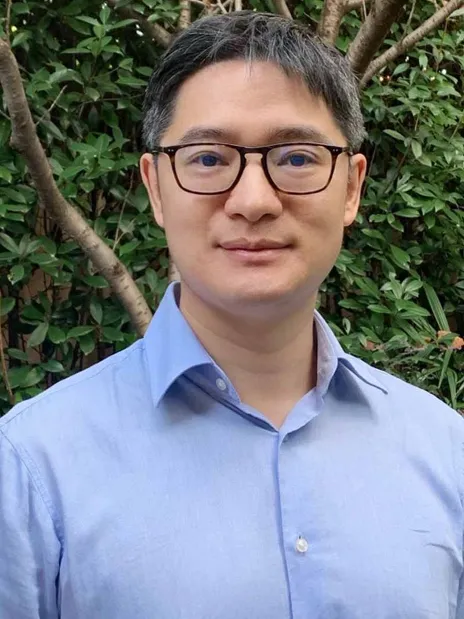
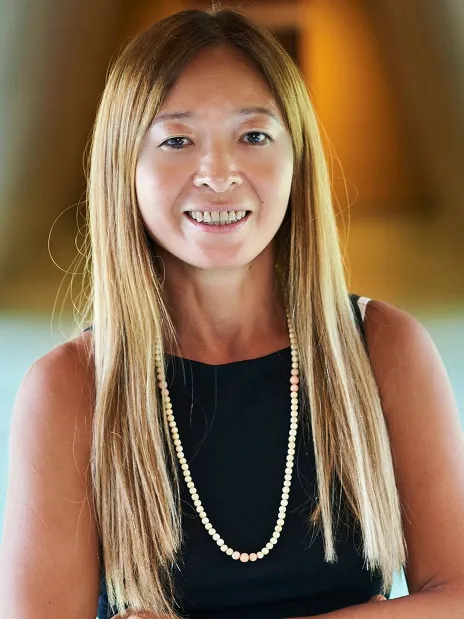
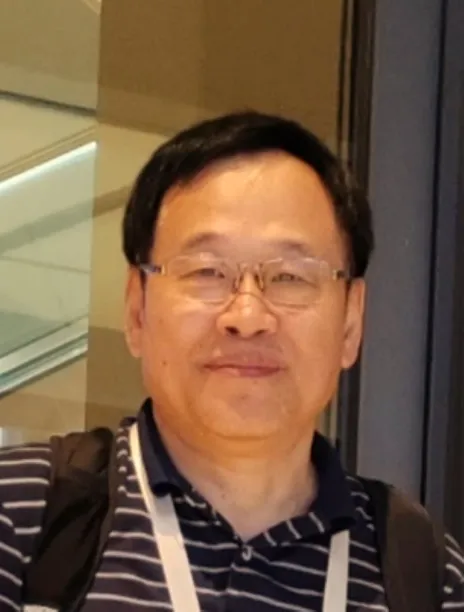
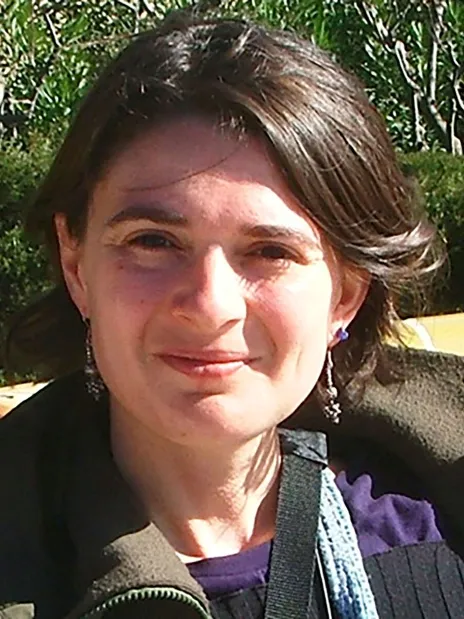
Dave Adams
University of Glasgow
Dongchan Ahn
Dow Chemical Company
Tommy Angelini
University of Florida
Markus Antonietti
Max Planck Institute of Colloids and Interfaces
Omar Azzaroni
UNLP
Piero Baglioni
University of Florence
Anna Balazs
University of Pittsburgh
Arindam Banerjee
Indian Association for the Cultivation of Science
Madivala Basavaraj
Indian Institute of Technology Madras
Patricia Bassereau
Physico Chimie Curie Lab
Stefan Bon
University of Warwick
Jasna Brujic
New York University
Jacinta Conrad
University of Houston
Vincent Craig
Australian National University
Emanuela Del Gado
Georgetown University
Jan Dhont
Forschungszentrum Jülich
Carmen Domene
University of Bath
Zahra Fakhraai
University of Pennsylvania
Glenn Fredrickson
University of California Santa Barbara
Valeria Garbin
Delft University of Technology
Jian Ping Gong
Hokkaido University
Ian Hamley
University of Reading
Lucio Isa
ETH Zürich
Paul Janmey
University of Pennsylvania
Gijsje Koenderink
Delft University of Technology
Daniela Kraft
Leiden University
Eugenia Kumacheva
University of Toronto
Oleg Lavrentovich
Kent State University
Junbai Li
Chinese Academy of Sciences
Christos Likos
University of Vienna
Dongsheng Liu
Tsinghua University
Bradley Olsen
Massachusetts Institute of Technology (MIT)
Rossana Pasquino
University of Naples Federico II
Sarah Perry
University of Massachusetts Amherst
Darrin Pochan
University of Delaware
David Quéré
ESPCI
Sriram Ramaswamy
Indian Institute of Science
Meital Reches
The Hebrew University of Jerusalem
Alejandro Rey
McGill University
Connie Roth
Emory University
Michael Rubinstein
Duke University
Sam Safran
Weizmann Institute of Science
Takamasa Sakai
The University of Tokyo
Peter Schurtenberger
Lund University
Kathleen Stebe
University of Pennsylvania
Joakim Stenhammar
Lund University
Howard Stone
Princeton University
Hajime Tanaka
University of Tokyo
Evelyne van Ruymbeke
Université catholique de Louvain
Jan Vermant
ETH Zürich
Petia Vlahovska
Northwestern University
Dimitris Vlassopoulos
FORTH-IESL
Yilin Wang
Chinese Academy of Sciences
Catherine Whitby
Massey University
Tim White
University of Colorado
Duyang Zang
Northwestern Polytechnical University
Maria Southall
Executive Editor
Kay Burrows
Deputy Editor
Emily Skinner
Editorial Manager
Molly Colgate
Assistant Editor
Katie Morton
Assistant Editor
Charu Storr-Vijay
Assistant Editor
Alison Winder
Assistant Editor
Basita Javeed
Editorial Assistant
Allison Holloway
Publishing Assistant
Sam Keltie
Publisher
Read this journal

Paper
On the relevance of inhomogeneity in saturated fatty acid compositions for the crystallization kinetics of fat blends
Paper
Cholesteric liquid crystal roughness models: from statistical characterization to inverse engineering
Paper
Optothermally induced active and chiral motion of colloidal structures
Paper
Tailoring interactions between active nematic defects with reinforcement learning
More from this journal
Contact the journal team
We're here to help. Contact the journal team if you have any questions about publishing your paper with us.
Sign up for journal email alerts
Get table of contents alerts and notifications about calls for papers, themed issues and more.