


Latest News
Gold aryl interactions as supramolecular synthons
01 July 2009
Edward Tiekink and Julio Zukerman-Schpector discuss Au-pi interactions in structural gold chemistry.
Anion coordination and anion-templated assembly under halogen bonding control
01 July 2009
Pierangelo Metrangolo, Giuseppe Resnati and co-workers focus on halogen-bonded architectures wherein anions function as halogen bonding acceptors.

CrystEngComm maintains pole position in Immediacy Index
21 June 2009
CrystEngComm has a new impact factor, and has maintained its pole position in immediacy index
Contents list for CrystEngComm, issue 7, 2009
Front cover
CrystEngComm, 2009, 11, 1157
DOI: 10.1039/b911204a

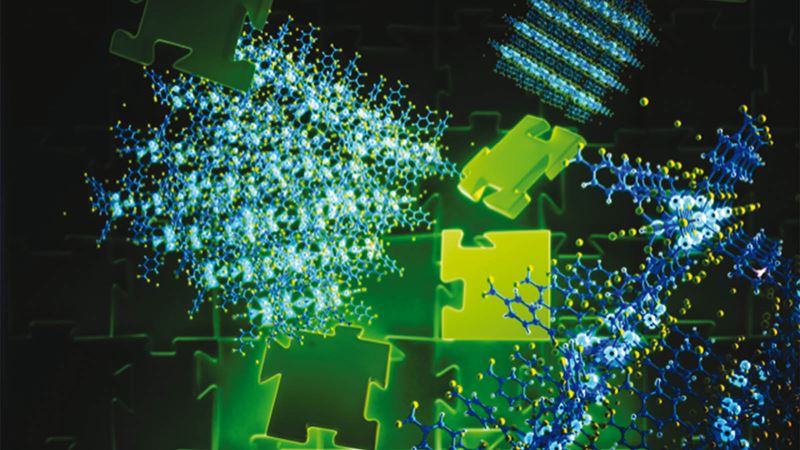
See Ogawa et al., pp. 1235–1239. The solid-state cis–trans photoisomerizations of olefins were observed by X-ray diffraction analysis, which revealed that the isomerizations proceeded through one bond flip (OBF) without destruction of the crystal lattices. Image reproduced by permission of Prof. Keiichiro Ogawa from CrystEngComm, 2009, 11, 1235.
Inside front cover
CrystEngComm, 2009, 11, 1158
DOI: 10.1039/b911205g
Contents and Chemical Technology
CrystEngComm, 2009, 11, 1159
DOI: 10.1039/b911206p
Highlights
Gold
aryl interactions as supramolecular synthons
Edward R. T. Tiekink and Julio Zukerman-Schpector,
CrystEngComm, 2009, 11, 1176
DOI: 10.1039/b901576k

A survey of the literature shows the presence of Au
contacts that lead to supramolecular assemblies.
Anion coordination and anion-templated assembly under halogen bonding control
Pierangelo Metrangolo, Tullio Pilati, Giancarlo Terraneo, Serena Biella and Giuseppe Resnati,
CrystEngComm, 2009, 11, 1187
DOI: 10.1039/b821300c

The effectiveness of halogen bonding in anion coordination and anion-templated assembly is highlighted showing its ability to afford a wide variety of supramolecular architectures in a rational and predictable way.
Communications
The key role of accurate lattice parameters in revealing subtle structural differences—a case study in the system [Ln(phen/phen-d8)2(NO3)3]
Franz Werner, Kentaro Tada, Ayumi Ishii, Masaki Takata and Miki Hasegawa,
CrystEngComm, 2009, 11, 1197
DOI: 10.1039/b904694c

Highly accurate lattice parameters, yielded by synchrotron powder diffraction, testify to the assignment of a new modification in the model system [Ln(phen/phen-d8)2(NO3)3].
Configuration determination of flexible tetracarboxylate ligands in two supramolecular structures
Lei Zhang, Qi-Pu Lin, Zhao-Ji Li, Jian Zhang, Ye-Yan Qin, Jian-Kai Cheng and Yuan-Gen Yao,
CrystEngComm, 2009, 11, 1201
DOI: 10.1039/b822767e

Two supramolecular structures have been prepared using flexible (2S,3S,4R,5R)-tetrahydrofurantetracarboxylic acid (H4La) and cis,cis,cis-1,2,3,4-cyclopentanetetracarboxylic acid (H4Lb) under similar conditions; La retains its original meso configuration, while Lb undergoes configuration conversion to the racemic form.
Ion-pair separation via selective inclusion/segregation processes
Giuseppe Gattuso, Anna Notti, Sebastiano Pappalardo, Melchiorre F. Parisi, Tullio Pilati, Giuseppe Resnati and Giancarlo Terraneo,
CrystEngComm, 2009, 11, 1204
DOI: 10.1039/b904811c

Confinement of iodide ions—via multiple halogen bonding—within
fluorous phase
layers has led to the isolation, in the solid state, of the first alkylammonium–calix[5]arene endo-cavity complex.
Two coordination polymers displaying unusual threefold 1D
1D and threefold 2D
3D interpenetration topologies
Jian-Qiang Liu, Yao-Yu Wang, Ping Liu, Zhe Dong, Qi-Zhen Shi and Stuart R. Batten,
CrystEngComm, 2009, 11, 1207
DOI: 10.1039/b905427h

We report two types of three-fold interpenetrating networks showing unprecedented 1D
1D and 2D
3D motifs, which represent the first examples of these structures.
New hydrothermal process for hierarchical TiO2 nanostructures
Arun Kumar Sinha, Subhra Jana, Surojit Pande, Sougata Sarkar, Mukul Pradhan, Mrinmoyee Basu, Sandip Saha, Anjali Pal and Tarasankar Pal,
CrystEngComm, 2009, 11, 1210
DOI: 10.1039/b906041n

Hydrothermolysis of inorganic Ti(IV) compounds (peroxo or sulfate) yields hierarchical titania nanocrystals of controlled morphologies on either a glass or resin surface.
Assembly of
discrete
(H2O)16 water clusters within a supramolecular compound of calixarene
Yanfeng Bi, Wuping Liao, Hongjie Zhang and Deqian Li,
CrystEngComm, 2009, 11, 1213
DOI: 10.1039/b903020d

A
discrete
(H2O)16 cluster, featuring four basic cyclic nine-membered rings and a twelve-membered ring, illustrates a new mode of supramolecular association of water molecules.
Crystal engineering of molecular networks. Hydrogen bonding driven two-dimensional assemblies of tetrapyridylporphyrin with benzene tri- and tetra-carboxylic acids
Rajesh Koner and Israel Goldberg,
CrystEngComm, 2009, 11, 1217
DOI: 10.1039/b906538p

Tetrapyridylporphyrin-based supramolecular network motifs can be designed not only by coordination through metal ion linkers, but also by complementary and cooperative hydrogen bonding with the aid of polycarboxylic bridging ligands as benzene tri- and tetra-carboxylic acids.
Robust hydrogen bonding synthon in one-dimensional and two-dimensional coordination polymers of pyridine-appended reverse amides and amides
Lalit Rajput and Kumar Biradha,
CrystEngComm, 2009, 11, 1220
DOI: 10.1039/b906285h

Two dimensional iso-structurality and control was achieved in coordination polymers by carefully selecting the ligands that contain two types of bis-amido pyridines which have different connectivities.
Conformational and color polymorphism of achiral 2-methyl-3-(2-naphthalenylthio)-1,4-naphthalenedione
Yoshitane Imai, Takafumi Kinuta, Keiko Nagasaki, Takunori Harada, Tomohiro Sato, Nobuo Tajima, Yoh Sasaki, Reiko Kuroda and Yoshio Matsubara,
CrystEngComm, 2009, 11, 1223
DOI: 10.1039/b900806c

An achiral compound, 2-methyl-3-(2-naphthalenylthio)-1,4-naphthalenedione, shows conformational and color polymorphism, and each polymorph shows different optical properties and can be controlled by changing crystallization conditions.
A 1D crystalline organic polyrotaxane formed via hydrogen bond-mediated self-assembly of a conformationally flexible tri-carboxylic acid
F. Christopher Pigge, Mayuri K. Dighe and Dale C. Swenson,
CrystEngComm, 2009, 11, 1227
DOI: 10.1039/b906196g

A well-defined organic polyrotaxane has been obtained from a 1,3,5-triaroylbenzene tris(carboxylic acid) derivative upon crystallization under acidic conditions.
Ultrafast synthesis of water-soluble nanocrystals by the chemical aerosol flow method
Hongbo Li, Fangqiong Tang, Linlin Li, Chuanmiao Yan, Xinglu Huang and Dong Chen,
CrystEngComm, 2009, 11, 1231
DOI: 10.1039/b904380m

We report an ultrafast method for synthesizing CdTe/CdS core/shell nanocrystals in an aqueous system via the chemical aerosol flow method. The crystallization process is completed in less than 10 s.
Papers
Single crystal cis–trans photoisomerizations of 2-(9-anthrylmethylene)-1-indanones
Jun Harada, Mayuko Harakawa, Shingo Sugiyama and Keiichiro Ogawa,
CrystEngComm, 2009, 11, 1235
DOI: 10.1039/b821900a

The crystal structure changes accompanying the solid-state cis–trans photoisomerizations of olefins were observed by X-ray diffraction analysis, which revealed that the isomerizations proceeded through one bond flip (OBF) and without destruction of the crystal lattices.
Halogen
oxygen aggregation and disorder modes in pressure frozen XCF2CF2X
:
1,4-dioxane (X = Br,I) complexes
Anna Olejniczak, Andrzej Katrusiak and Ashwani Vij,
CrystEngComm, 2009, 11, 1240
DOI: 10.1039/b822832a

Kinetic crystallization of a hexagonal
snowflake
of ICF2CF2I
:
1,4-dioxane cocrystal at high pressure. Its structure is dominated by halogen
oxygen interactions, while the –CF2–CF2– and –CH2–CH2– moieties are orientationally disordered.
Combination of primary amide and dipyrrin for the elaboration of extended architectures built upon both coordination and hydrogen bonding
Stéphane A. Baudron, Domingo Salazar-Mendoza and Mir Wais Hosseini,
CrystEngComm, 2009, 11, 1245
DOI: 10.1039/b901167f

The 5-(benzamide)dipyrrin, a simple ditopic tecton combining H- and coordination-bonding sites leads in the presence of metal cations or metal complexes to a variety of hybrid molecular networks in the solid state.
[M(OOCC6H4PO3H)(H2O)] (M(II) = Mn, Co, Ni): layered metal phosphonates showing variable magnetic behavior
Jin-Tang Li, Tony D. Keene, Deng-Ke Cao, Silvio Decurtins and Li-Min Zheng,
CrystEngComm, 2009, 11, 1255
DOI: 10.1039/b820935a

Isomorphous metal phosphonates [M(OOCC6H4PO3H)(H2O)] [M(II) = Mn (1), Co (2), Ni (3)] have layered structures where the {M2O2} dimers are connected by carboxylate and/or phosphonate groups. Dominant antiferromagnetic interactions are observed in both 1 and 2, while for 3, a spontaneous ferromagnetic long range ordering occurs below Tc = 4.0 K.
Structures and luminescent properties of a series of Ln–Ag heterometallic coordination polymers
Xiao-Qing Zhao, Bin Zhao, Wei Shi and Peng Cheng,
CrystEngComm, 2009, 11, 1261
DOI: 10.1039/b900430k

Eight 4f–4d (Ln–Ag) coordination polymers have been synthesized under hydrothermal conditions. They exhibit three different structures with 2D grid, 1D double-helical chain and 1D wave-like chain. Luminescent studies reveal that 7 may serve as a luminescent probe for Mg2+.
Controlled growth of multi-morphology hexagonal t-Se microcrystals: tubes, wires, and flowers by a convenient Lewis acid-assisted solvothermal method
Dabin Yu, Tao Jiang, Feng Wang, Zirong Wang, Yan Wang, Wen Shi and Xiaoquan Sun,
CrystEngComm, 2009, 11, 1270
DOI: 10.1039/b819852g

Multi-morphology hexagonal t-Se microcrystals, including tubes and wires with a well-defined crystallographical structure and the flowers with chrysanthemum-, sisal-, and urchin-like shapes, were synthesized in high yield by a convenient Lewis acid-assisted solvothermal method.
Alternative crystal forms produced by a dialcohol inclusion host
Resolutions and polymorphs. Part 3
Vi T. Nguyen, Roger Bishop, Donald C. Craig and Marcia L. Scudder,
CrystEngComm, 2009, 11, 1275
DOI: 10.1039/b822624p

Racemic dialcohol 2 normally forms compounds (2)3·(guest) in the cubic space group Ia
. Despite this generally reliable behaviour, the (2)6·(p-xylene) and (2)2·(water) structures described here are complex and radically different alternatives.
Bird-like spiro-metallacyclic complexes based on a bent oxadiazole bridging ligand
Xia-Xia Zhao, Jian-Ping Ma, Da-Zhong Shen, Yu-Bin Dong and Ru-Qi Huang,
CrystEngComm, 2009, 11, 1281
DOI: 10.1039/b818753n

The coordination chemistry of a new symmetric organic ligand 2,5-bis(3-(1H-1,2,4-triazol-1-ylmethyl)phenyl)-1,3,4-oxadiazole (L2) with inorganic M(II) (M = Cd, Co, Cu and Mn) salts has been investigated. Eight new bird-like spiro-metallocyclic complexes (1–8) were synthesized.
Simulation of absorption sites of acetone at ice: (0001) surface, bulk ice and small-angle grain boundaries
Sonja M. Hammer, Robin Panisch, Maja Kobus, Jürgen Glinnemann and Martin U. Schmidt,
CrystEngComm, 2009, 11, 1291
DOI: 10.1039/b820918a

The adsorption of acetone on the (0001) surface of ice Ih and the absorption in bulk ice and at small-angle grain boundaries were investigated using force-field and ab initio calculations. The adsorption of an acetone molecule on the ice surface is energetically preferred. In all cases the acetone molecule is bound by two hydrogen bonds.
Oriented growth of a single crystalline Cu(111) flake synthesized by pyrolysis of coordination polymer [(CuBr)2(bpy)]n (bpy = 2,2
-bipyridine)
Zhi-Fang Liu, Ai-Xin Zhu, Chi-Keung Lam, Guang-Wei Xie, Chao-Lun Liang, Xiao-Ming Chen and Zheng-Ping Qiao,
CrystEngComm, 2009, 11, 1303
DOI: 10.1039/b819813f

Oriented growth of a single crystalline Cu(111) flake was synthesized by simply pyrolyzing a 1-D chain-like hybrid coordination polymer [(CuBr)2(bpy)]n, which was first synthesized via a hydrothermal method, by controlling the heating procedures.
The crystal structure of the API Montelukast
Juergen Thun, Wolfgang Milius, Bastian Wedel, Andre Ridder, Peter Moersdorf and Josef Breu,
CrystEngComm, 2009, 11, 1306
DOI: 10.1039/b822821c

The crystal structure of the title compound Montelukast could be solved. Lattice energy minimizations together with experimental data helped to understand the crystallization of this API.
Variant shape growth of nanoparticles of metallic Fe–Pt, Fe–Pd and Fe–Pt–Pd alloys
Diane Ung, Le D. Tung, Gabriel Caruntu, Dimitrios Delaportas, Ioannis Alexandrou, Ian A. Prior and Nguyen T. K. Thanh,
CrystEngComm, 2009, 11, 1309
DOI: 10.1039/b823290n

We report the controlled syntheses of Fe–Pt, Fe–Pd and Fe–Pt–Pd nanoparticles having different isolated shapes including sphere, cube, octopod-cube, star, rod, bilobe, tetrahedron, or multipod with size of 5–50 nm.
A facile sonochemical route to morphology controlled nickel complex mesostructures
Qian Wang, Baoyou Geng, Shaozhen Wang, Jun Liu, Zhiguo Cheng and Dajie Si,
CrystEngComm, 2009, 11, 1317
DOI: 10.1039/b900997c

Nickel complex particles with controllable morphologies are fabricated by a sonochemical route. Nickel complex particles can self-assemble into impeller or clew-like morphologies based on the formed plate-like particles.
New red phosphor with a high color purity: controlled synthesis of 3D architectures of YW2O6(OH)3
:
Eu
Lin Xu, Chunliang Lu, Jianmin Shen, Yuping Chen, Zihui Zhang and Wenhua Hou,
CrystEngComm, 2009, 11, 1323
DOI: 10.1039/b820335k

This work provided not only an efficient route to preparing 3D YW2O6(OH)3
:
Eu hierarchical architectures with different fascinating morphologies, but also a new method to enhance the color purity of phosphors.
Competitive interactions in crystalline 9-pyridyl-9-fluorenols: crossover from O–H
O to O–H
N hydrogen bonding to construct intra- and intermolecular, helical and linear contact modes
R. Hosseinzadeh, Z. Lasemi, W. Seichter and E. Weber,
CrystEngComm, 2009, 11, 1331
DOI: 10.1039/b822101d

A phenyl for pyridyl exchange featuring the pyridyl ring in different linkage positions in a 9-phenyl-9-fluorenol parent compound shows significant consequences on the crystalline packing behaviour.
Different nanostructures of boehmite fabricated by hydrothermal process: effects of pH and anions
Taobo He, Lan Xiang and Shenlin Zhu,
CrystEngComm, 2009, 11, 1338
DOI: 10.1039/b900447p

Different nanostructures of boehmite fabricated at varying pH demonstrate that the anions in the hydrothermal solution play an important role in determining the morphology of boehmite.
Synthesis of supramolecular metallo-amine-oxy acid systems via crystal disassembly/reassembly
Kay Latham, Emily J. Mensforth, Colin J. Rix and Jonathan M. White,
CrystEngComm, 2009, 11, 1343
DOI: 10.1039/b822193f

Crystal disassembly/reassembly enabled the efficient interconversion of [CuI(phen)2]·I·H2O (2) to the phenylphosphonate [CuI(phen)2)]·[(PhPO(OH)2)·(PhP(O)2OH)] (3) to the novel phenylsulfonate [CuI(phen)2)]·[(PhS(O)3)]·2H2O (4). A general assembly of
ribbons
of [Cu(II)(phen)2I]+ interleaved with
sheets
of H-bonded anions was observed.
Co-crystallization experiments of thiocarbamides with bipyridine-type molecules
Carol A. Ellis, Michael A. Miller, James Spencer, Julio Zukerman-Schpector and Edward R. T. Tiekink,
CrystEngComm, 2009, 11, 1352
DOI: 10.1039/b822555a

The systematic investigation on crystal structure formation of co-crystals involving (i) the thiocarbamide derivatives of the general formula ROC(
S)N(H)R
, for R = Me, Et and iPr, and R
= Ph and PhNO2-4, containing a pharmaceutically relevant chromophore, and (ii) the bipyridine-type molecules, e.g. 4,4
-bipyridine, trans-1,2-bis(4-pyridyl)ethene and 1,2-bis(4-pyridyl)ethane, proved the facile formation of 2
:
1 co-crystals.
The influence of crystal packing effects upon the molecular structures of Ph3Sn(CH2)nSnPh3, n = 1 to 8, as determined by X-ray crystallography and DFT molecular orbital calculations. Supramolecular aggregation patterns sustained by C–H
interactions
Ryan P. A. Bettens, Dainis Dakternieks, Andrew Duthie, Fong Sheen Kuan and Edward R. T. Tiekink,
CrystEngComm, 2009, 11, 1362
DOI: 10.1039/b822682b

The importance of global crystal packing considerations upon molecular geometry is demonstrated for a series of dinuclear organotin species.
Counteranion's effects on the structures of supramolecular silver coordination compounds of one asymmetric and one biting organic ligands
Cao-Yuan Niu, Ben-Lai Wu, Xian-Fu Zheng, Xin-Sheng Wan, Hong-Yun Zhang, Yun-Yin Niu and Lu-Yan Meng,
CrystEngComm, 2009, 11, 1373
DOI: 10.1039/b818745b

Two series of 10 silver complexes are systematically synthesized and structurally characterized by comparison to search for the laws of counteranions' effects on the molecular and supramolecular structures of coordination compounds.
Monodisperse cubic pyrite NiS2 dodecahedrons and microspheres synthesized by a solvothermal process in a mixed solvent: thermal stability and magnetic properties
Shi-Liu Yang, Hong-Bin Yao, Min-Rui Gao and Shu-Hong Yu,
CrystEngComm, 2009, 11, 1383
DOI: 10.1039/b900444k

Monodisperse cubic pyrite NiS2 dodecahedrons and microspheres with a diameter of 6 µm have been first synthesized by a solvothermal approach in ethylenediamine–glycol mixed solvent at 200 °C. The morphology and the phase transformation of the products have been investigated.
Electrostatic matching in phase IV of chloroiodomethane: a new aggregation pattern in the isostructural classes of dihalomethanes
Marcin Podsiad
o and Andrzej Katrusiak,
CrystEngComm, 2009, 11, 1391
DOI: 10.1039/b820422e

Electrostatic matching, reallized by the formation of two different patterns of intermolecular directional halogen
halogen and CH
halogen forces, has been evidenced in the polymorphs of chloroiodomethane (CH2ClI). The different matching results in different molecular volumes and thermodynamic stability regions of the polymorphs.
Crystal structures with a challenge: high-pressure crystallisation of ciprofloxacin sodium salts and their recovery to ambient pressure
Francesca P. A. Fabbiani, Birger Dittrich, Alastair J. Florence, Thomas Gelbrich, Michael B. Hursthouse, Werner F. Kuhs, Norman Shankland and Heidrun Sowa,
CrystEngComm, 2009, 11, 1396
DOI: 10.1039/b822987b

Two novel sodium salts of the antibiotic ciprofloxacin were crystallised at high pressure and subsequently recovered to ambient pressure. The structures are described and compared using the XPac method.
-Stacking of quinoid rings in crystals of alkali diaqua hydrogen chloranilates
Kre
imir Mol
anov, Biserka Koji
-Prodi
and Anton Meden,
CrystEngComm, 2009, 11, 1407
DOI: 10.1039/b821011j

Face-to-face 

stacking of nonaromatic quinoid rings is facilitated by dipolar interactions. The distances between centroids and carbon–carbon distances in contiguous rings are the shortest observed, about 0.2
shorter than the sum of the van der Waals radii.
Molecular bricklaying II.
Anion and chain length effects in bisbenzimidazolonium salts
Simon Verdan, Xavier Melich, Gérald Bernardinelli and Alan F. Williams,
CrystEngComm, 2009, 11, 1416
DOI: 10.1039/b820737b

The crystal structures of bis(benzimidazole) cations show layer structures with stacking interactions and hydrogen bonding to anions perpendicular to the stacking axis. Increasing the length of the spacer between benzimidazoles disfavours this type of structure, but the smaller cations show a brickwork motif also seen in the Cathedral of Albi.
Syntheses and crystal structures of two new nickel(II) complexes with pyrazine-2,3,5,6-tetracarboxylate
Li-Hua Zhao, Ying-Ping Quan, Ai-Hong Yang, Jian-Zhong Cui, Hong-Ling Gao, Fan-Li Lu, Wei Shi and Peng Cheng,
CrystEngComm, 2009, 11, 1427
DOI: 10.1039/b820663e

Two new Ni(II) complexes containing Pyrazine-2,3,5,6-tetracarboxylate and 1,10-phenanthroline, [Ni(H2pztc)(phen)H2O]·H2O (1) and [Ni(phen)3][H2pztc]·10.5H2O (2) were synthesized under hydrothermal conditions and at room temperature respectively.
A discussion on the solid state organization of 4-pyridyl imino compounds and on the co-crystallization between their molecular precursors
Alessia Bacchi, Mauro Carcelli, Tiziana Chiodo, Giulia Cantoni, Cecilia De Filippo and Silvio Pipolo,
CrystEngComm, 2009, 11, 1433
DOI: 10.1039/b821909e

Local factors related to molecular geometry control supramolecular features of differently shaped 4-pyridyl iminoalcohols obtained by condensation between aminoalcohols and ketones/aldehydes. Co-crystal formation during synthesis is also rationalized.
Structures, photoluminescence and photocatalytic properties of three new metal–organic frameworks based on non-rigid long bridges
Dong-E Wang, Ke-Jian Deng, Kang-Le Lv, Cheng-Gang Wang, Li-Li Wen and Dong-Feng Li,
CrystEngComm, 2009, 11, 1442
DOI: 10.1039/b821263e

With the aid of different non-rigid N-heterocycles used as spacers, three coordination polymers containing rigid 5-nitro-1,3-benzenedicarboxylic acid with different architectures have been obtained. Notably, compound 3 represents the rare example of coordination polymers with a 4f metal ion that exhibits good photocatalytic activity for dye degradation under UV light.
Competition between OH
O and multiple halogen–dipole interactions on the formation of intramolecular three-centred hydrogen bond in 3-acyl coumarins
Rocío J. Santos-Contreras, Francisco J. Martínez-Martínez, N. Alejandra Mancilla-Margalli, Ana L. Peraza-Campos, Luis M. Morín-Sánchez, Efrén V. García-Báez and Itzia I. Padilla-Martínez,
CrystEngComm, 2009, 11, 1451
DOI: 10.1039/b818309k

Multicentered halogen–dipole interactions are strong enough to direct the preferred conformation and to organize the supramolecular structure in the solid state, in opposition to strong O?H
O hydrogen bonding.
Microwave synthesis and single-crystal-to-single-crystal transformation of magnesium coordination polymers exhibiting selective gas adsorption and luminescence properties
Hsin-Kuan Liu, Tai-Hsing Tsao, Ya-Ting Zhang and Chia-Her Lin,
CrystEngComm, 2009, 11, 1462
DOI: 10.1039/b819559e

A new magnesium coordination polymer obtained through single-crystal-to-single-crystal transformation by heating can adsorb H2, but not N2.
Back matter
CrystEngComm, 2009, 11, 1469
DOI: 10.1039/b912277j
Back cover
CrystEngComm, 2009, 11, 1471
DOI: 10.1039/b912278h