



The Norman Heatley Award is for outstanding contributions made by an early career scientist working at the chemistry and life science interface.
- Run annually
- The winner receives £3000, a medal and a certificate
- The winner will complete a UK lecture tour
- The winner will be chosen by the RSC Chemistry Biology Interface Prize Committee
2024 Winner
2024 Chemistry Biology Interface early career Prize: Norman Heatley Award Winner
Dr Benjamin Schumann, Imperial College London and the Francis Crick Institute
For the creative use of chemistry-centred tools to provide valuable insights into glycan biology.

Deadlines
- Nominations open 15 October.
- Nominations close 14 January, 17:00 GMT.
- Reference deadline 21 January, 17:00 GMT.
Eligibility
Individuals named in any of the following roles during the nomination and judging period are not eligible to nominate, be nominated or provide a reference:
- Chemistry Biology Interface Prize Committee members
- RSC Subject Community Presidents
- RSC Prize Committee members
- Trustees of the Royal Society of Chemistry
- Royal Society of Chemistry staff
Nominators:
- Only RSC members can nominate for this prize.
- Nominees may NOT nominate themselves.
Nominees:
- The prize is open to nominees working in the UK and Ireland only.
- Nominees should be an early career scientist (for further details, see information below and in the ‘Guidelines for Nominators’ section).
- Nominees can only be considered for one of our Research & Innovation Prizes in any given year. In a case where a nominee is nominated for more than one prize independently, RSC staff will ask the nominee which prize they would like to be considered for.
- We will not consider nominations of deceased individuals.
Career stage guidance
- After fully taking account of any time away from research, career breaks or interruptions, nominees will typically have no more than 10 years of full-time equivalent professional experience at the closing date for nominations.
- We define this as experience gained as part of a career working in scientific research, excluding time spent in full-time education. For example, experience studying as a postgraduate (PhD) student is not included, but this does include experience working as e.g. a post-doctoral researcher, or working in research in industry.
- Nominators will be asked to provide details of the nominee's professional experience, in relation to the above criteria (see ‘Guidelines for Nominators’). The Prize Committee will consider this information in relation to the eligibility criteria, and they have the discretion to consider any nomination for a different prize under their remit.
- We particularly encourage nominations of disabled people, those who work part-time, or whose career has spanned a break for any reason – for example, a period of parental or adoption leave, caring responsibilities, long-term illness, family commitments, or other circumstances. We understand that these can impact a nominee’s career in different ways, and encourage nominators to use the space provided on the nomination form to explain the nature and impact of the nominees’ individual circumstances (see 'Guidelines for Nominators' for further details).
- Please do not hesitate to contact the team at awards@rsc.org should you have any questions about the above.
Guidelines for nominators
General information
- When nominating previous RSC prize winners, please remember that a person cannot be awarded twice for substantially the same body of work.
- Nominees should only be nominated once for this prize in any given prize cycle. In cases where we receive more than one nomination for the same nominee, only one nomination will go forward to judging.
- Since 2023, we have been trialling a process where all unsuccessful nominations will automatically rollover once, to be considered for the next round of the prize, unless the nominee's circumstances have changed to make them ineligible. This means that:
- All nominations submitted for the first time for a 2024 prize will be considered for a 2025 prize. We strongly encourage nominators to update their nomination between cycles when the nomination window is open.
- The RSC Prize Committee will review the outcomes from the trial in July 2025.
Submitting your nomination
Please use our online nominations system to submit the following information:
- Your name, contact details, and RSC membership number (please contact the RSC Membership team if you do not know your membership details).Your RSC membership must be confirmed at the point of nomination – it is not sufficient to have a membership application in process. The identity of nominators is not made known to our judging panels. The RSC reserves the right to amend nominations if necessary to ensure the anonymity of the nominator.
- Your nominee's name and contact details.
- An up to date CV for the nominee (no longer than one A4 side, 11pt text) which should include a summary of their education and career, and a maximum of 5 relevant publications or patents.
- Information relating to your nominee’s career and professional experience, which will be shared with the committee. Before doing so, RSC staff will always seek consent from the nominee in cases where special category data is mentioned. Please make sure that you provide enough information for the committee to understand the nature and impact of any time away from research.
- Date (month and year) of the start of their career working in scientific research.
- Details (dates and time periods) of any part-time work, time away from research, career breaks or interruptions – for example, parental/adoption leave, caring responsibilities, long-term illness, family commitments, etc.
- Any other circumstances not captured above – for example, long-term conditions, disabilities, etc., that you would like the committee to be aware of and consider.
- A short citation describing what the nominee should be awarded for. This must be no longer than 250 characters (including spaces) and no longer than one sentence.
- A supporting statement (up to 750 words) addressing the selection criteria. Our guidance for nominators page has more information on writing this supporting statement.
- A statement (up to 100 words) describing how your nominee has contributed more broadly to the scientific community. A list of possible examples is outlined in the ‘selection criteria’ tab.
- The name and contact details of one referee. The referee might be the nominee's post-doc or PhD supervisor, line manager, project manager or mentor:
- The reference should be a maximum of 750 words. Referees will be asked to state their relationship (if any) with the nominee and note any conflicts of interest.
- All references must be submitted through the online system by the reference deadline, 21 January, 17:00 GMT. Nominations will not go forward to judging without a completed reference. Please ensure you submit your referee's details in plenty of time, to allow them sufficient opportunity to provide their reference.
- As soon you submit your referee’s details, they will receive an automated e-mail with a link to submit their reference. Please contact awards@rsc.org as soon as possible if you experience any issues with this.
- It is the nominator’s responsibility to ensure that the referee is aware of the nomination, that they should expect an e-mail invitation to submit their reference, and that they are aware of what is required to ensure that the reference is submitted before the deadline.
- All referees will receive one e-mail reminder from RSC staff in the week before the reference deadline.
The RSC reserves the right to rescind any prize if there are reasonable grounds to do so. All nominators will be asked to confirm that to the best of their knowledge there is no impediment, relating to professional conduct, to their nominee receiving this prize. All prize winners will be asked to sign the RSC’s Code of Conduct Declaration for Recognition.
Make a nominationSelection Criteria and Judging Panel
Our selection committees base their evaluations on the overall quality of relevant contributions and achievements by nominees, in relation to the selection criteria listed below.
The scientific content of any supporting publications, as described in the supporting statement, is much more important than publication metrics or the identity of the journal in which it is published.
The selection committee will consider the following aspects of nominations for this prize:
- Originality of research
- Impact of research
- Quality of publications and/or patents and/or software
- Innovation
- Professional standing
- Independence
- Collaborations and teamwork
- Other indicators of esteem indicated by the nominator/referee
The committee will give greater priority to recent work; supporting statements should focus on the nominee's more recent achievements.
In an instance where multiple nominees are judged equally meritorious in relation to the above criteria, judging panels have the flexibility to use information provided by the nominator on the nominee’s broader contribution to the chemistry community as an additional criterion.
Examples of relevant contributions could include, but are not limited to:
- Involvement with Royal Society of Chemistry member groups/networks
- Teaching/demonstrating
- Effective mentorship
- Service on boards, committees or panels
- Leadership in the scientific community
- Peer-reviewer
- Promotion of diversity and inclusion
- Advocacy for chemistry
- Public engagement and outreach
Chemistry Biology Interface Prize Committee
- Mark Bradley, Queen Mary University of London (Chair)
- Ysobel Baker, University of Southampton
- Ulrike Eggert, Kings College London
- Gavin Miller, Keele University
- Louise Walport, Francis Crick
- Andrew Williams, Slowave Therapeutics
- Lu Shin Wong, University of Manchester
History of the prize
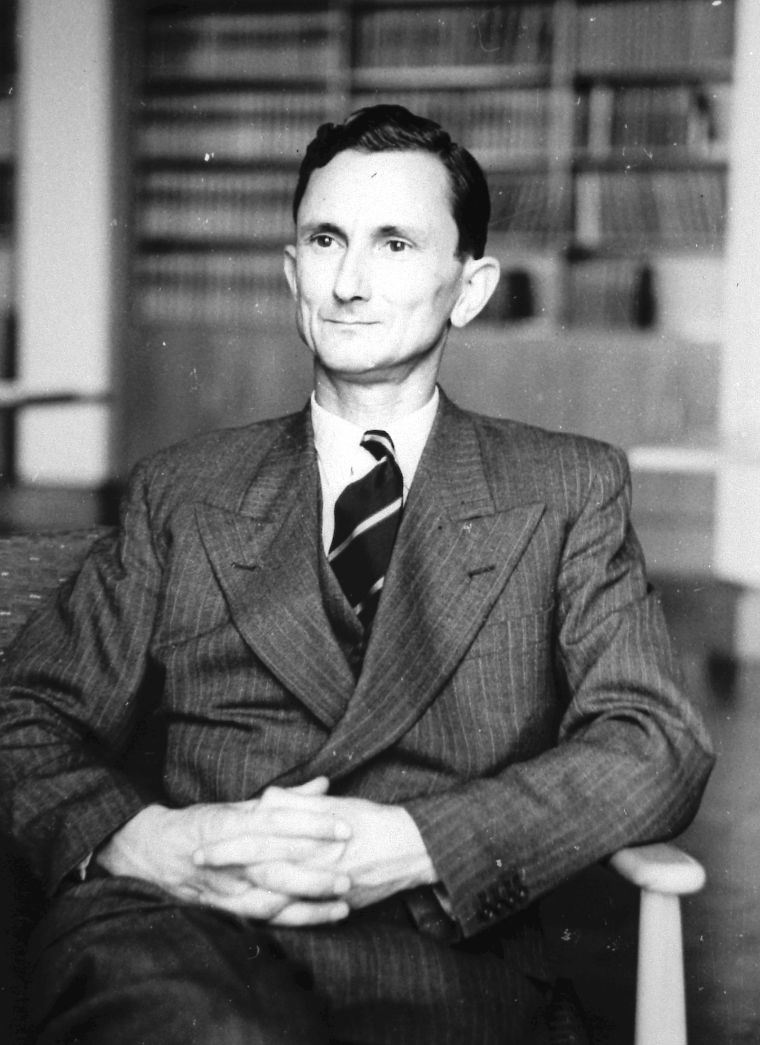
This prize is named in honour of Norman Heatley. It was previously advertised as the Chemical Biology Interface Forum Early Career Award, and was established in 2008.
Norman Heatley graduated from St John's College, Cambridge, with a degree in Natural Sciences. He then undertook a PhD in Biochemistry, also at Cambridge, after which he moved to Oxford to work at the Sir William Dunn School of Pathology.
Although Alexander Fleming discovered penicillin, he did not realise its full potential. It was Professor Howard Florey and his team at Oxford who recognised that penicillin could combat bacterial infection. Heatley played a key role in developing culture methods for the penicillium mould and in extracting and purifying the active 'penicillin' from the cultures in order to test it on animals and eventually on humans also. He designed the specially commissioned ceramic 'bed pans' to grow these cultures on a larger scale.
An Abingdon policeman dying of septicaemia, Albert Alexander, was the first human to be treated with penicillin. As the drug was in such short supply, it was even extracted from the patient's urine on a daily basis in order to be re administered. Dramatic improvements were seen; however, there was not sufficient penicillin to continue with the treatment.
The major drug companies in wartime Britain were already overstretched and so could not be persuaded to attempt to mass produce penicillium cultures. Florey and Heatley flew to the USA where they persuaded several of the largest pharmaceutical companies to collaborate in the research to find better strains of penicillium and better methods of culture, extraction and purification. By 1943, mass production had begun and casualties in the Second World War could be treated. The full potential of penicillin then became clear.
Florey was advised by University lawyers and the MRC that he should not take out patents on his team's discoveries, although subsequently, patents of some of the methods developed were filed in the USA.
Fleming received a Nobel Prize and more than 160 public honours for his part in the discovery and development of penicillin, the world's first antibiotic. Heatley received one honorary degree, a DM from Oxford, the first awarded to a non-medic, and two honorary fellowships and an OBE from the nation for his work.
The prize was established through a bequest from Adrien Albert. In 2021, the purposes of this Trust were amended, and remaining monies were combined with other generous bequests and donations to become part of the RSC Recognition Fund.

Re-thinking recognition: Science prizes for the modern world
This report is the result of an independent review of our recognition programmes. Our aim in commissioning this review was to ensure that our recognition portfolio continues to deliver the maximum impact for chemical scientists, chemistry and society.
Prizes
- Tel:
- +44 (0)1223 432418
- Email:
- Send us an email