


You can find details about how to access information remotely in this step-by-step guide. The guide will also help if for any reason you have difficulty accessing the content you want.
What would you like to know about this journal?
RSC Medicinal Chemistry is a Transformative Journal and Plan S compliant
Impact factor: 4.1*
Time to first decision (all decisions): 10.0 days**
Time to first decision (peer reviewed only): 30.0 days***
Editor-in-Chief: Mike Waring
CiteScore: 5.8****
Open access publishing options available
Journal scope
RSC Medicinal Chemistry publishes significant research in medicinal chemistry and related drug discovery science.
Research articles published in this journal must show a breakthrough or significant advance on previously published work, or bring new thinking or results that will have a strong impact in their field.
Examples of areas within the journal's scope are:
- Design, synthesis and biological evaluation of novel chemical entities or biotherapeutic modalities. To be suitable for publication these must exhibit significant potential as new pharmacological agents, tools, probes or potential drugs.
- Modifications of known chemical entities or biotherapeutic modalities that result in a significantly greater understanding of their structure-activity relationships, an improvement of their properties or provide other information of significant value, for example, the identification of a new target or mode of action for a known agent. Routine modifications with minimal or no improvement are not suitable for RSC Medicinal Chemistry.
RSC Medicinal Chemistry Emerging Investigator Lectureship
This Lectureship celebrates outstanding early career researchers who have made significant contributions in the fields of medicinal chemistry and drug discovery. The RSC Medicinal Chemistry Lectureship is awarded annually through a process whereby nominations of candidates are invited from our community.
You can read about eligibility, how to nominate, deadlines for nominations and see all of our lectureship winners.
Find out more
Meet the team
Find out who is on the editorial and advisory boards for the RSC Medicinal Chemistry journal.
Editor-in-chief
Mike Waring, Newcastle University, UK
Associate editors
Cynthia Dowd, George Washington University, USA
Maria Duca, Université Côte d’Azur - CNRS, France
Sankar K. Guchhait, National Institute of Pharmaceutical Education and Research (NIPER), India
Sally-Ann Poulsen, Griffith University, Queensland, Australia
Jian Zhang, Shanghai Jiao Tong University School of Medicine, China
Editorial board members
Hayley Binch, Hoffman-La Roche, Switzerland
Paola Castaldi, MatchPoint Therapeutics, USA
Lyn Jones, Dana-Farber Cancer Institute, USA
Jean-Louis Reymond, University of Bern, Switzerland
Timor Baasov, Israel Institute of Technology, Israel
Andreas Bender, University of Cambridge, UK
Julian Blagg, Institute of Cancer Research, UK
Margaret Brimble, University of Auckland, New Zealand
Mark Bunnage, Vertex, USA
Christopher Burns, Certa Therapeutics, Australia
Andrea Cavalli, University of Bologna, Italy
Young-Tae Chang, POSTECH, South Korea
James Crawford, Altos Labs, USA
Matthew Duncton, Rigel Pharmaceuticals Inc
Stephen Frye, University of North Carolina at Chapel Hill, USA
Matthew Fuchter, Imperial College London, UK
Sylvie Garneau-Tsodikova, University of Kentucky, USA
Jayanta Haldar, Jawaharlal Nehru Centre for Advanced Scientific Research, India
Gyoonhee Han, Yonsei University, Korea
Mike Hann, GSK Medicines Research Centre, Stevenage, UK
Christian Heinis, EPFL, Switzerland
Laura H. Heitman, Leiden University, Netherlands
Yoshinori Ikeura, Axcelead Drug Discovery Partners, Japan
Ahmed Kamal, NIPER, Hyderabad, India
Robert Langer, MIT, USA
Steven V Ley, University of Cambridge, UK
María Luz López Rodríguez, Complutense University of Madrid, Spain
Christa Muller, University of Bonn, Germany
Roberto Pellicciari, University of Perugia, Italy
David Rees, Astex Therapeutics, Cambridge, UK
Motonari Uesugi, Kyoto University, Japan
John C Vederas, University of Alberta, Canada
Paul Wender, Stanford University, USA
Zhen Yang, Peking University, China
Ming-Qiang Zhang, Amgen, Shanghai, China
Katie Lim, Executive Editor
Harriet Riley, Deputy Editor
Emily Cuffin-Munday, Development Editor
Sarah Anthony, Editorial Production Manager
Nicola Burton, Publishing Editor
Tom Cozens, Publishing Editor
Ryan Kean, Publishing Editor
Roxane Owen, Publishing Editor, ORCID 0000-0002-4553-233X
Lauren Yarrow-Wright, Publishing Editor
Andrea Whiteside, Publishing Assistant
Sam Keltie, Publisher, Journals, ORCID 0000-0002-9369-8414
Transparent peer review
As part of our commitment to transparency and open science, RSC Medicinal Chemistry is now offering authors the option of transparent peer review, where the editor’s decision letter, reviewers’ comments and authors’ response for all versions of the manuscript will be published alongside the article under an Open Access Creative Commons licence (CC-BY).
Reviewers will remain anonymous unless they choose to sign their report.
Journal specific guidelines
Human and animal welfare
When a study involves the use of live animals or human subjects, authors must include in the 'methods/experimental' section of the manuscript a statement that all experiments were performed in compliance with the relevant laws and institutional guidelines, and must state the institutional committee(s) that has approved the experiments. A statement that informed consent was obtained for any experimentation with human subjects is required. Reviewers may be asked to comment specifically on any cases in which concerns arise.
More information on the Royal Society of Chemistry journals’ ethical policies can be found in our Author responsibilities page.
Disclosure of chemical structures
Chemical structures should be reported in the manuscript if that structure is necessary to understand the paper or repeat an experimental or computational procedure. Chemical structures should not be blanked out. In certain cases the non-disclosure of chemical structures may be acceptable, and these are considered on a case-by-case basis by the Associate Editor.
Experimental methods and data
Sufficient details of experimental or computational procedures should be included such that a scientist skilled in the art would be able to reproduce the results presented. The synthesis of all new compounds must be described in detail. Descriptions of synthetic procedures must include the specific reagents and solvents employed and must give the amounts (g, mmol) used. Products yields (%) must be reported together with a clear statement of how the percentage yields were calculated. The final physical state (solid; amorphous; liquid; solution) of the product should be disclosed. Where compounds are synthesised as part of an array or library a representative synthesis will be sufficient.
Authors should limit experimental procedures and data to two journal pages (approximately 5 double-spaced pages), with all additional experimental information and data placed in the electronic supplementary information (ESI).
Characterisation of organic compounds
Characterisation levels should be consistent with the importance of the compound to the conclusion of the work:
- For all tested compounds purity should be at least 95%, confirmed by either 1H/13C NMR data (with spectrum presented in the supplementary file), HPLC, GC, electrophoresis or elemental analysis. Further characterisation data should be supplied where available
- For key compounds (those which are subject to further study beyond initial screening), additional data should include 1H NMR data (with spectrum presented in the supplementary file) and LC-MS data. Further data such as 13C NMR, IR, CHN data and HRMS data should be supplied if available
- For chiral compounds, when used as a non-racemate, specific rotation and evidence of enantiomeric purity via chiral HPLC or derivatisation to diastereoisomeric compounds/use of chiral shift reagents should be given. Where HPLC is used conditions employed should be supplied including column type, flow rate, solvent system and detection method
- For compounds made as part of an array that are not considered key compounds, LC-MS data is sufficient.
- For compounds generated through combinatorial methods, lead compounds should be characterised to the same standards as compounds generated through standard synthetic procedures.
- For known compounds, an original reference to previously reported data should be cited; however authors should also include any new, previously unpublished characterisation data that have been obtained for known compounds.
Characterisation of biomolecules
(For example, enzymes, peptides, proteins, DNA/RNA, oligosaccharides, oligonucleotides)
Authors should provide evidence for the identity and purity of the biomolecules described. The techniques that may be employed to substantiate identity include the following:
- Mass spectrometry
- LC-MS
- Sequencing data (for proteins and oligonucleotides)
- High field 1H,13C NMR
- X-ray crystallography
Purity must be established by one or more of the following:
- HPLC
- Gel electrophoresis
- Capillary electrophoresis
- High field 1H,13C NMR.
Sequence verification should also be provided for nucleic acid cases involving molecular biology. For organic synthesis involving DNA, RNA oligonucleotides, their derivatives or mimics, purity must be established using HPLC and mass spectrometry as a minimum. For new derivatives comprising modified monomers, the usual organic chemistry analytical requirements for the novel monomer must be provided. However, it is not necessary to provide this level of characterisation for the oligonucleotide into which the novel monomer is incorporated.
Novel macromolecular structures and newly reported nucleic acid or protein sequences and microarray data must be deposited with the appropriate database. Articles will not be published until the relevant accession number has been provided. These codes should be quoted in the experimental section of the manuscript. Microarray data should be MIAME compliant.
All Western blot and other electrophoresis data should be supported by the underlying raw images. The image of the full gel and blot, uncropped and unprocessed, should be provided in the supplementary information on submission. All samples and controls used for a comparative analysis should be run on the same gel or blot.
When illustrating the result, any cropping or rearrangement of lanes within an image should be stated in the figure legend and with lane boundaries clearly delineated. Alterations should be kept to a minimum required for clarity.
Each image should be appropriately labelled, with closest molecular mass markers and lanes labelled. All details must be visible, over or underexposed gels and blots are not acceptable. Authors should be able to provide raw data for all replicate experiments upon request.
Biological data
Biological test methods should be described in sufficient detail such that a scientist skilled in the art would be able to reproduce the results presented. Forms of administration as well as physical states and formulations should be noted. Doses and concentrations should be expressed as molar quantities (for example, mol kg-1, µmol kg-1, M, µM). For those compounds found to be inactive, the highest concentration (in vitro) or dose level (in vivo) tested should be indicated. For in vivo studies vehicle information should be supplied.
Quantitative biological data are required for all test compounds. It is expected that all tested compounds would be 95% pure and shown to be so using standard methods. Active compounds from combinatorial syntheses should be re-synthesised and retested to verify biological activity. In these cases experimental procedures and characterisation data as described above should be provided. Known or standard compounds or drugs should be tested under the same experimental conditions for the purpose of comparison (as a positive control). Data may be presented in tabulated form or as graphs; extensive data for compounds should be presented in the electronic supplementary information. Authors should use a number of significant figures that is relevant to the accuracy of the data. Information about the error associated with biological data, for example standard deviation or SEM, should be provided along with the number of experimental determinations.
Pan Assay Interference (PAINS) Compounds
In cases where potential assay interference compounds (for example covalent modifiers, luminescent molecules, redox active compounds, metal chelators, membrane disruptors or unstable compounds which can decompose to form active compounds)are reported as being active, authors should provide evidence in the experimental section that this activity is genuine and is not due to an artefact. For more information about interference compounds see JB Baell and GA Holloway, J. Med. Chem. 2010, 53, 2719-2740.
Computational studies
Details of the types of computational studies that are suitable for publication in RSC Medicinal Chemistry are given in the “Scope” section above.
Computational methods should be described in sufficient detail such that a scientist skilled in the art would be able to reproduce the results presented. Where computational studies are accompanied by experimental results (for example to validate a prediction) those experimental procedures and data should also be described in detail (see guidelines for experimental procedures above). Where an existing computational method is used authors should provide reasoning why this is appropriate for their study.
QSAR & QSPR studies
Studies which report new methodology or theory should be validated against at least one other common data set for which a study using another method has been published previously. Standard studies must be accompanied by new experimental data which tests their predictive power. To be considered for RSC Medicinal Chemistry such studies should demonstrate significant potential to advance the field of medicinal chemistry. Any data or structures which are used to carry out a QSAR or QSPR study should either be made available as supplementary material, or be freely available elsewhere with a reference to the location included in the manuscript.
Statistical analysis
In articles where there is large-scale statistical analysis one of the named authors should be a statistician.
Guidelines on writing titles, abstracts & table of contents entry
The title, abstract and table of contents entry (graphical abstract) are the first parts of your manuscript that editors, referees and potential readers will see, and once published they play a major part in a researcher’s decision to read your article. Therefore it’s important that these clearly and concisely show the main findings of your research and why they are important.
Title
The title should be short and straightforward to appeal to a general reader, but detailed enough to properly reflect the contents of the article.
- Keep it relatively short – between 8 and 15 words is ideal
- Use easily recognisable words and phrases that can be read quickly
- Use general terms for compounds and procedures rather than specific nomenclature or very specialised terms
- Avoid using non-standard abbreviations and symbols
- Avoid using subjective terms such as “novel”
- Use keywords and familiar, searchable terms – these can increase the chances of your article appearing in search results. Around 70% of our readers come directly via search engines.
Abstract
The abstract is a single paragraph which summarises the findings of your research. It will help readers to decide whether your article is of interest to them.
- The length can vary from 40 to 150 words, but it should always be concise and easy to read, with recognisable words and phrases.
- It should set out the objectives of the work, the key findings and why this research is important (compared to other research in its field).
- It should emphasise (but not overstate) the significance and potential impact of the research in your article.
- Avoid including detailed information on how the research was carried out. This should be described in the main part of the manuscript.
- Like your title, make sure you use familiar, searchable terms and keywords.
Table of contents entry
A table of contents entry (graphical abstract) is required, which should be submitted at the revision stage. This should include an eye-catching graphic and 1-2 sentence(s) of text to summarise the key findings of the article to the reader. It will appear in the table of contents and feeds – for example, RSS feeds.
The graphic should:
- Be simple, but informative.
- Capture the reader’s attention (the use of colour is encouraged).
- Include a structure, scheme, graph, drawing, photograph or combination that conveys the message of the article. Please note, complex schematics or spectra should be avoided.
- Be original, unpublished artwork created by one of the co-authors. Preferably, the graphic should not be reused and appear again within the article.
- Be suitable for, and uphold the standards of, a scholarly publication that has a global reach.
- Not contain any elements that are offensive or inappropriate, in particular words or images that are discriminatory.
- Not contain large amounts of text. Text should be limited to the labelling of compounds, reaction arrows and diagrams, with long phrases or sentences being avoided. Any text should be clearly legible to a reader.
- Not contain logos, trademarks or brands names.
The text should:
- Be concise and focus only on the key findings of the manuscript and their importance, not the processes used; think about what would grab the attention of the potential reader and would encourage them to read the full article.
- Avoid repeating or paraphrasing the title or abstract.
- Use easily recognisable words and phrases that can be read quickly.
Table of contents specifications:
- The figure should be a maximum size of 8 cm wide x 4 cm high.
- Figures should be supplied as TIFF files, with a resolution of 600 dpi or greater.
- The text supplied should be 1-2 sentences long, using a maximum of 250 characters.
Titles
Injectable peptide hydrogels for controlled-release of opioids
From DOI: 10.1039/C5MD00440C
Drug trapping in hERG K+ channels: (not) a matter of drug size?
From DOI: 10.1039/C5MD00443H
Structural hybridization of three aminoglycoside antibiotics yields a potent broad-spectrum bactericide that eludes bacterial resistance enzymes
From DOI: 10.1039/C5MD00429B
Rigid amphipathic nucleosides suppress reproduction of the tick-borne encephalitis virus
From DOI: 10.1039/C5MD00538H
Abstracts
Vast numbers of prevalent aminoglycoside-modifying enzymes undermine the clinical use of aminoglycoside antibiotics. We present the design and synthesis of a potent broad-spectrum bactericidal aminoglycoside based on available X-ray co-crystal structures within the ribosomal binding-site. The resulting antibiotic displays broad protection of its functional groups from inactivation by clinically relevant resistance enzymes.
From DOI: 10.1039/C5MD00429B
Advanced glycation end products (AGEs) are associated with various diseases, especially during aging and the development of diabetes and uremia. To better understand these biological processes, investigation of the in vivo kinetics of AGEs, i.e., analysis of trafficking and clearance properties, was carried out by molecular imaging. Following the preparation of Cy7.5-labeled AGE-albumin and intravenous injection in BALB/cA-nu/nu mice, noninvasive fluorescence kinetics analysis was performed. In vivo imaging and fluorescence microscopy analysis revealed that non-enzymatic AGEs were smoothly captured by scavenger cells in the liver, i.e., Kupffer and other sinusoidal cells, but were unable to be properly cleared from the body. Overall, these results highlight an important link between AGEs and various disorders
From DOI: 10.1039/C6OB00098C
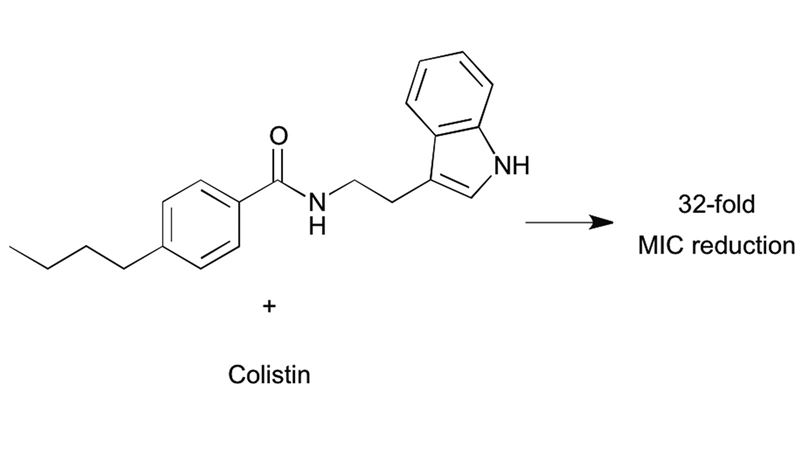
A screen of 20 compounds identified small molecule adjuvants capable of potentiating antibiotic activity against Francisella philomiragia. Analogue synthesis of an initial hit compound led to the discovery of a potentially new class of small molecule adjuvants containing an indole core. The lead compound was able to lower the MIC of colistin by 32-fold against intrinsically resistant F. philomiragia.
From DOI: 10.1039/C5MD00353A
Table of contents
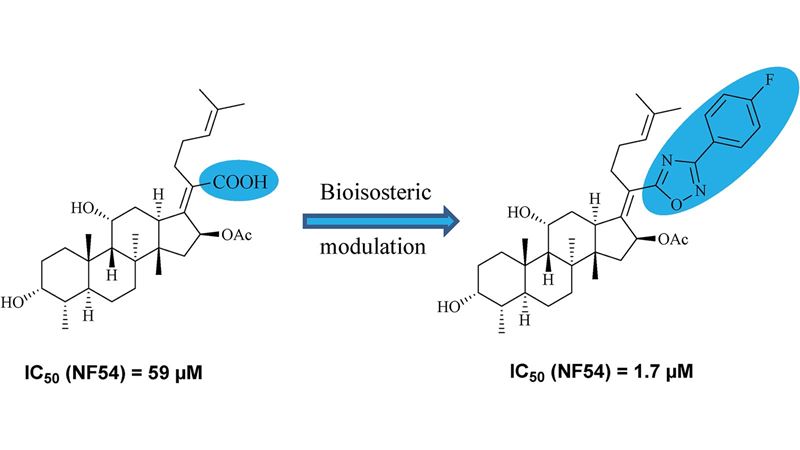
Structural modifications through bioisosteric approach yielded fusidic acid analogues with 2–35 folds increase in antiplasmodial activity as compared to fusidic acid.
From DOI:10.1039/C5MD00343A
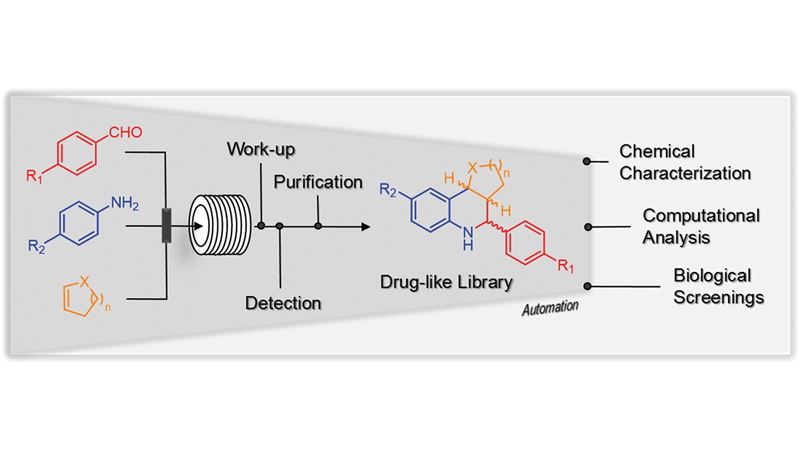
The combination of flow chemistry and computational tools has been successfully applied to prepare a focused library of tricyclic tetrahydroquinolines endowed with drug-like properties.
From DOI: 10.1039/C5MD00455A
A screen of 20 compounds identified small molecule adjuvants capable of potentiating antibiotic activity against Francisella philomiragia.
From DOI: 10.1039/C5MD00353A
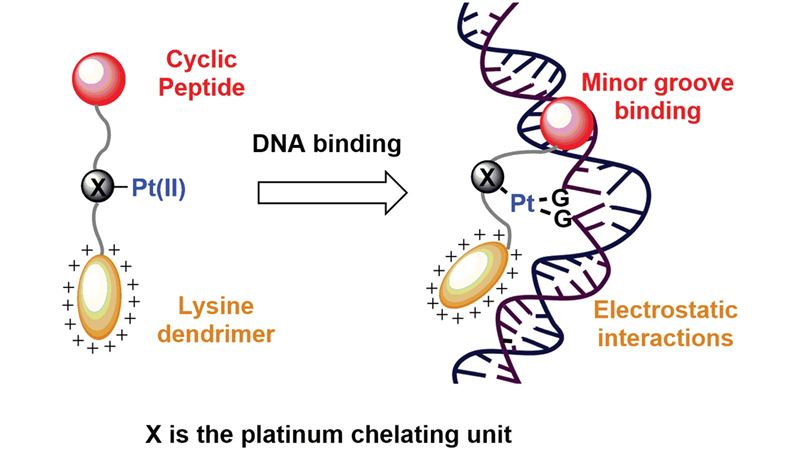
A platinum complex/peptide chimera shows specific DNA binding and covalent platination with potential as a novel chemotherapeutic.
From DOI: 10.1039/C5OB01885D
Open access publishing options
RSC Medicinal Chemistry is a hybrid (transformative) journal and gives authors the choice of publishing their research either via the traditional subscription-based model or instead by choosing our gold open access option. Find out more about our Transformative Journals. which are Plan S compliant.
Gold open access
For authors who want to publish their article gold open access, RSC Medicinal Chemistry charges an article processing charge (APC) of £2,750 (+ any applicable tax). Our APC is all-inclusive and makes your article freely available online immediately, permanently, and includes your choice of Creative Commons licence (CC BY or CC BY-NC) at no extra cost. It is not a submission charge, so you only pay if your article is accepted for publication.
Learn more about publishing open access.
Read & Publish
If your institution has a Read & Publish agreement in place with the Royal Society of Chemistry, APCs for gold open access publishing in RSC Medicinal Chemistry may already be covered.
Use our journal finder to check if your institution has an open access agreement with us.
Please use your official institutional email address to submit your manuscript and check you are assigned as the corresponding author; this helps us to identify if you are eligible for Read & Publish or other APC discounts.
Traditional subscription model
Authors can also publish in RSC Medicinal Chemistry via the traditional subscription model without needing to pay an APC. Articles published via this route are available to institutions and individuals who subscribe to the journal. Our standard licence allows you to make the accepted manuscript of your article freely available after a 12-month embargo period. This is known as the green route to open access.
Readership information
Researchers in academia and industry studying medicinal chemistry, pharmacology, and topics in the wider chemical, biological and materials sciences with application to biological problems.
Subscription information
RSC Medicinal Chemistry is part of the RSC Gold subscription package.
Online only 2024: ISSN 2632-8682, £1,709 / $2,533
*2023 Journal Citation Reports (Clarivate Analytics, 2024)
**The median time from submission to first decision including manuscripts rejected without peer review from the previous calendar year
***The median time from submission to first decision for peer-reviewed manuscripts from the previous calendar year
****CiteScore™ 2023 available at www.scopus.com/sources
Share
Advertisement