


You can find details about how to access information remotely in this step-by-step guide. The guide will also help if for any reason you have difficulty accessing the content you want.
What would you like to know about this journal?
Organic & Biomolecular Chemistry is a Transformative Journal and Plan S compliant
Impact factor: 3.2*
Time to first decision (all decisions): 13.0 days**
Time to first decision (peer-reviewed only): 15.0 days***
Chair: Anthony Davis
Indexed in MEDLINE
CiteScore: 6.4****
Best Impact Factor Quartile (SCIE Category 2022): Q2 (Chemistry, Organic)
Open access publishing options available
Journal scope
Organic & Biomolecular Chemistry (OBC) publishes original and high impact research and reviews in organic chemistry.
We welcome research that shows new or significantly improved protocols or methodologies in total synthesis, synthetic methodology or physical and theoretical organic chemistry as well as research that shows a significant advance in the organic chemistry or molecular design aspects of chemical biology, catalysis, supramolecular and macromolecular chemistry, theoretical chemistry, mechanism-oriented physical organic chemistry, medicinal chemistry or natural products.
Articles published in the journal should report new work which makes a highly-significant impact in the field. Routine and incremental work is generally not suitable for publication in the journal.
More details about key areas of our scope are below. In all cases authors should include in their article clear rationale for why their research has been carried out.
Author benefits
- One of the fastest organic chemistry journals* - with an average receipt to first decision time of just 14.1 days for Communications and 18.5 days for Papers
- Flexible submission format; submit in any reasonable format, and no template required
- Optional accepted manuscript publication; have the unedited version of your article published shortly after acceptance
- Easy submission and manuscript tracking online
- Choice of submission routes; authors can choose either the Cambridge editorial office or submission to an associate editor
- Unlimited free colour, both online and in print
- High exposure; top papers highlighted in the wider scientific press
- Broadest organic audience; synthetic, physical and biomolecular
- Indexed in MEDLINE and other major databases
*Based on the average time from receipt to first decision for manuscripts submitted in 2023.
Meet the team
Find out who is on the editorial and advisory boards for the Organic & Biomolecular Chemistry journal.
Chair
Anthony Davis, University of Bristol, UK
Associate editors
Jeroen Dickschat, University of Bonn, Germany
Katrina Jolliffe, University of Sydney, Australia
Motomu Kanai, University of Tokyo, Japan
Xiaohua Liu, Sichuan University, China
Santanu Mukherjee, Indian Institute of Science, Bangalore, India
Scott Silverman, University of Illinois at Urbana-Champaign, USA
Cristina Trujillo, The University of Manchester, UK
Huan Wang, Nanjing University, China
Editorial board members
S.S.V Ramasastry, Indian Institute of Science Education and Research Mohali, India
Corinna Schindler, University of Michigan, USA
Judy I-Chia Wu, University of Houston, USA
Igor Alabugin, Florida State University, USA
Gonçalo Bernardes, University of Cambridge, UK
Shunsuke Chiba, Nanyang Technological University, Singapore
Andre Cobb, Kings College London, UK
Steven Cobb, Durham University, UK
Ratmir Derda, University of Alberta, Canada
Antonio Echavarren, Autonomous University of Madrid, Spain
Ben Feringa, University of Groningen, Netherlands
Amar Flood, Indiana University Bloomington, USA
Carmen Galan, University of Bristol, UK
Christian Hackenberger, Leibniz-Institut für Molekulare Pharmakologie and Humboldt Universität zu Berlin, Germany
Jason Harper, University of New South Wales, Australia
Ivan Huc, Ludwig-Maximilian University of Munich, Germany
Elizabeth Krenske, University of Queensland, Australia
Mahesh Lakshman, The City College of New York, USA
Lei Liu, Tsinghua University, China
Shih-Yuan Liu, Boston College, USA
Geraldine Masson, Institut de Chimie des Substances Naturelles (CNRS), France
Elizabeth New, University of Sydney, Australia
Dhevalapally Ramachary, University of Hyderabad, India
Paolo Scrimin, University of Padova, Italy
Oliver Seitz, Humboldt University of Berlin, Germany
Jay Siegel, University of Zürich, Switzerland
Corey Stephenson, University of Michigan, USA
Dean Tantillo, University of California Davis, USA
Mark Taylor, University of Toronto, Canada
Georgios Vassilikogiannakis, University of Crete, Greece
Helma Wennemers, ETH Zürich, Switzerland
Peter Wipf, University of Pittsburgh, USA
Shuli You, Shanghai Institute of Organic Chemistry, China
Jian Zhou, East China Normal University, China
Katie Lim, Executive Editor
Jack Washington, Deputy Editor
Daniel Robertshaw, Development Editor
Sarah Anthony, Editorial Production Manager
Nicola Burton, Publishing Editor
Tom Cozens, Publishing Editor
Ryan Kean, Publishing Editor
Roxane Owen, Publishing Editor, ORCID 0000-0002-4553-233X
Lauren Yarrow-Wright, Publishing Editor
Andrea Whiteside, Publishing Assistant
Sam Keltie, Publisher, Journals, ORCID 0000-0002-9369-8414
Transparent peer review
As part of our commitment to transparency and open science, Organic & Biomolecular Chemistry is now offering authors the option of transparent peer review, where the editor’s decision letter, reviewers’ comments and authors’ response for all versions of the manuscript will be published alongside the article under an Open Access Creative Commons licence (CC-BY).
Reviewers will remain anonymous unless they choose to sign their report.
Journal specific guidelines
Data and supporting information
Characterisation of compounds
OBC has minimum characterisation data requirements for i) new compounds, and ii) known compounds that have been synthesised by a new method. These requirements are described below.
There is no requirement to provide characterisation data for the synthesis of a known compound by a literature method; in these cases authors should provide a literature reference to previously-published characterisation data for that compound. However, authors are welcome to provide details of improved experimental protocols, more detailed characterisation data, or selected data from known compounds.
Organic compounds
Data required for both new compounds and known compounds synthesised by a new method
Copies of 1H NMR spectra (which contain no more than trace peaks that are not assigned to the structure in question) should be supplied as supplementary material. Spectra should be of high resolution and displayed in landscape, ideally with one spectrum per page.
Data required for new compounds only (in addition to the data specified above)
It is the responsibility of authors to provide fully convincing evidence for the homogeneity, purity and identity of all compounds they claim as new. This evidence is required to establish that the properties and constants reported are those of the compound with the new structure claimed. Referees will assess, as a whole, the evidence presented in support of the claims made by the authors.
The following are required in all cases:
- Complete numerical listings of 1H,13C NMR peaks in support of the assigned structure
- Copies of 13C NMR spectra (containing no more than trace peaks that are not assigned to the structure in question) as supplementary material. Spectra should be of high resolution and displayed in landscape, ideally with one spectrum per page
- High-resolution mass spectrometry (HRMS), with a found value within 0.003m/z unit of the calculated value of a parent-derived ion. Elemental analysis data may be provided if HRMS is not available.
The following are required in specific cases:
- Infrared spectra should be supplied to support functional group transformations when such data are chemically necessary to establish the transformations
- Specific rotation should be supplied for chiral non-racemic compounds, when such data are chemically necessary or of intrinsically high importance for future researchers. Such data are expected when stereocenters are created or defined during asymmetric synthesis or catalysis
- The determination of enantiomeric excess of nonracemic, chiral substances should be supported with either GC/HPLC traces with retention times for both enantiomers and separation conditions (that is, chiral support, solvent and flow rate) or copies of the spectra for Mosher Ester/Chiral Shift Reagent analysis
- Copies of 2D NMR and related experiments (that is, NOE, etc) should be supplied as supplementary material in cases where these data are used to assign the structure
- Proof of absolute configuration should be supplied for chiral compounds. In cases where this is not available, a statement as to why this cannot be supplied should be included in the manuscript. For closely related structures assignment by analogy is acceptable if the configuration of one compound in the series is unambiguously assigned
In a small number of cases, some of the characterisation techniques which are normally required for new organic compounds may not be applicable or possible to obtain (for example, for some supramolecular systems). In these circumstances, the evidence for identity and purity will be judged on a case-by-case basis by the editor and referees.
Biomolecules (such as enzymes, peptides, proteins, DNA/RNA, oligosaccharides, oligonucleotides)
It is not possible to give hard and fast requirements for the characterisation of biomolecules as the applicability and availability of different techniques often depend on molecule type or size. In all cases, LC-MS or equivalent data (for example, HPLC data plus MS data on collected peaks) should be supplied for key synthetic intermediates, and as evidence of the purity and identity of the final compound.
Additional data, such as high field 1H,13C NMR, X-ray crystallography or sequencing data (for proteins and oligonucleotides) may be provided if available. In some cases, authors may be required to provide some of this additional data if it is thought necessary by the referees.
For new derivatives comprising modified monomers, the usual organic chemistry analytical requirements for the novel monomer must be provided (see Organic compounds). It is not however necessary to provide this level of characterisation for the oligomer into which the novel monomer is incorporated.
Computational work
We ask that the following information be provided where possible:
- As a minimum, papers reporting QM work should include the atomic coordinates, energies, and number of imaginary frequencies for all computed stationary points.
- The level of theory used for computations should be mentioned in the text, and/or in the caption of the first figure that reports the results of those computations.
- Computational methodology should be described in sufficient detail to allow calculations to be reproduced by other researchers.
- Where calculations are performed with density functional theory, the integration grid used for the calculations should be specified.
- All relevant total energies (potential energies, enthalpies, Gibbs free energies, etc.) should be reported for each computed species.
- For transition states (TSs), the magnitude of the frequency of the imaginary vibrational mode may also be reported.
- For intrinsic reaction coordinate (IRC) calculations, any shoulders in the IRC plots should be noted. If IRC calculations reveal that a TS corresponded to a reaction pathway different from that suggested by simple animation of its imaginary mode, then the IRC results (plots and details of reactants/products) should be included in the ESI.
- Where computational work is included as part of a synthetic study, full details of any theoretical characterization (for example, computational NMR or VCD) of products and/or important synthetic intermediates should be documented.
- In the spirit of FAIR data, mol2 or pdb files for coordinates would also be welcomed.
Guidelines on writing titles, abstracts & table of contents entry
The title, abstract and graphical abstract are the first parts of your manuscript that editors, referees and potential readers will see, and once published they play a major part in a researcher’s decision to read your article. Therefore it’s important that these clearly and concisely show the main findings of your research and why they are important.
Title
The title should be short and straightforward to appeal to a general reader, but detailed enough to properly reflect the contents of the article.
- Keep it relatively short – between 8 and 15 words is ideal
- Use easily recognisable words and phrases that can be read quickly
- Use general terms for compounds and procedures rather than specific nomenclature or very specialised terms
- Avoid using non-standard abbreviations and symbols
- Avoid using subjective terms such as “novel”
- Use keywords and familiar, searchable terms – these can increase the chances of your article appearing in search results. Around 70% of our readers come directly via search engines
Abstract
The abstract is a single paragraph which summarises the findings of your research. It will help readers to decide whether your article is of interest to them.
- The length can vary from 50 to 250 words (or 40 to 75 words for Communications), but it should always be concise and easy to read with recognisable words and phrases
- It should set out the objectives of the work, the key findings and why this research is important (compared to other research in its field)
- It should emphasise (but not overstate) the significance and potential impact of the research in your article
- Avoid including detailed information on how the research was carried out; this should be described in the main part of the manuscript
- Like your title, make sure you use familiar, searchable terms and keywords
Table of contents entry
A table of contents entry (graphical abstract) is required, which should be submitted at the revision stage. This should include an eye-catching graphic and 1-2 sentence(s) of text to summarise the key findings of the article to the reader. It will appear in the table of contents and feeds – for example, RSS feeds.
The graphic should:
- Be simple, but informative.
- Capture the reader’s attention (the use of colour is encouraged) – for example, for synthetic articles a target compound or key reaction scheme work well.
- Include a structure, scheme, graph, drawing, photograph or combination that conveys the message of the article. Please note, complex schematics or spectra should be avoided.
- Be original, unpublished artwork created by one of the co-authors. Preferably, the graphic should not be reused and appear again within the article.
- Be suitable for, and uphold the standards of, a scholarly publication that has a global reach.
- Not contain any elements that are offensive or inappropriate, in particular words or images that are discriminatory.
- Not contain large amounts of text. Text should be limited to the labelling of compounds, reaction arrows and diagrams, with long phrases or sentences being avoided. Any text should be clearly legible to a reader.
- Not contain logos, trademarks or brands names.
The text should:
- Be concise and focus only on the key findings of the manuscript and their importance, not the processes used; think about what would grab the attention of the potential reader and would encourage them to read the full article.
- Avoid repeating or paraphrasing the title or abstract.
- Use easily recognisable words and phrases that can be read quickly.
Table of Contents specifications:
- The figure should be a maximum size of 8 cm wide x 4 cm high.
- Figures should be supplied as TIFF files, with a resolution of 600 dpi or greater.
- The text supplied should be 1-2 sentences long, using a maximum of 250 characters.
Titles
Iron-catalyzed arylation of α-aryl-α-diazoesters
From DOI: 10.1039/C5OB02418H
Copper-catalyzed electrophilic amination using N-methoxyamines
From DOI: 10.1039/C5OB02167G
Anti-Selective aminofluorination of alkenes with amidines mediated by hypervalent iodine(III) reagents
From DOI: 10.1039/C5OB01854D
Lewis acid-promoted [2 + 2] cycloadditions of alkenes with aryl ketenes
From DOI: 10.1039/C5OB01837D
A versatile synthesis of chiral β-aminophosphines
From DOI: 10.1039/C5OB02439K
Ruthenium photoredox-triggered phospholipid membrane formation
From DOI: 10.1039/C6OB00290K
An alternative, unsuitable way of writing the final example above would be:
Ru(bpy3)2+ 11-watt CFL-triggered tool reduces Cu(II) and initiates CuAAC reaction leading to phospholipid synthesis and in situ membrane formation
This title is too detailed and includes terms and compound names which are too specific (e.g.Ru(bpy3)2+, CuAAC)
Abstracts
A method for the preparation of chiral β-aminophosphines having substituted P-aryl groups is described. Ring-opening of cyclic sulfamidates with metal diarylphosphinites yields β-aminophosphine oxides, which are then reduced to the corresponding phosphines. Effects of the diarylphosphinite countercation on the regioselectivity of the ring-opening reaction (P- versus O-alkylation) are discussed. This method enables the introduction of electron-deficient, electron-rich and sterically hindered diarylphosphino groups, as demonstrated by the synthesis of a series of novel, P-aryl-substituted β-aminophosphines derived from tert-leucinol, valinol and phenylglycinol. Access to these derivatives will create new opportunities for steric and electronic tuning of β-aminophosphine-derived chiral ligands and organocatalysts.
From DOI: 10.1039/C5OB02439K
Copper-catalysed electrophilic amination of a triarylboroxin using an N-methoxyamine to give quick access to a variety of anilines was reported. The reaction was especially useful for syntheses of functionalised anilines when combined with our previously reported nucleophilic addition to N-methoxyamides.
From DOI: 10.1039/C5OB02167G
Advanced glycation end products (AGEs) are associated with various diseases, especially during aging and the development of diabetes and uremia. To better understand these biological processes, investigation of the in vivo kinetics of AGEs, i.e., analysis of trafficking and clearance properties, was carried out by molecular imaging. Following the preparation of Cy7.5-labeled AGE-albumin and intravenous injection in BALB/cA-nu/nu mice, noninvasive fluorescence kinetics analysis was performed. In vivo imaging and fluorescence microscopy analysis revealed that non-enzymatic AGEs were smoothly captured by scavenger cells in the liver, i.e., Kupffer and other sinusoidal cells, but were unable to be properly cleared from the body. Overall, these results highlight an important link between AGEs and various disorders
From DOI: 10.1039/C6OB00098C
Table of contents
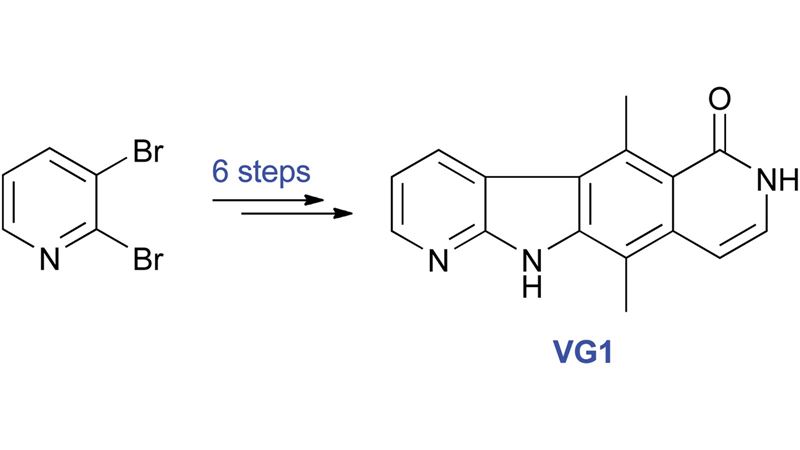
A new route to a tetracyclic lactam was developed and the product, called VG1, was found to inhibit nonsense-mediated mRNA decay at μM concentrations.
From DOI: 10.1039/c5ob02482j
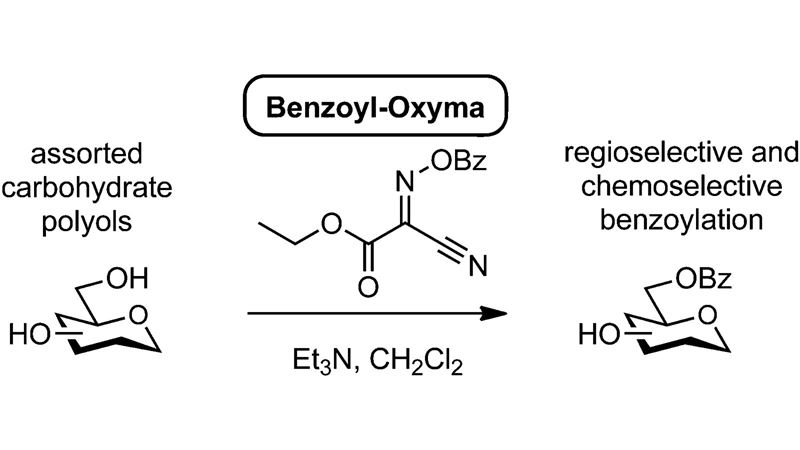
Benzoyl-Oxyma is a highly crystalline, readily prepared, safer alternative to benzoyloxybenzotriazole, useful in the selective benzoylation of carbohydrate polyols.
From DOI: 10.1039/C5OB02092A
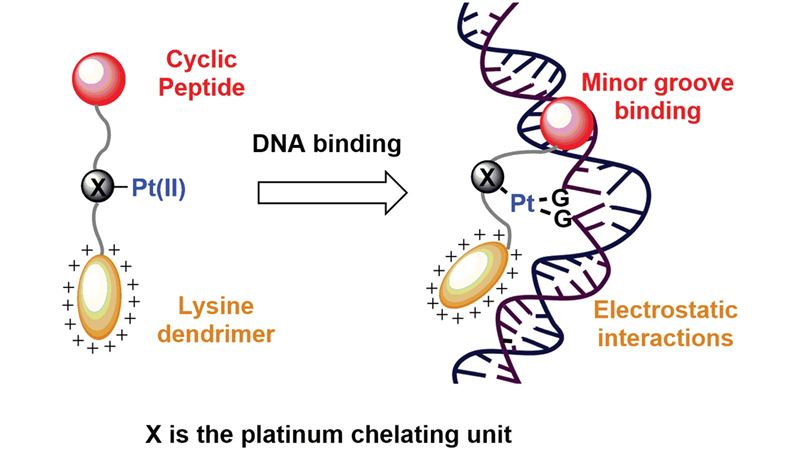
A platinum complex/peptide chimera shows specific DNA binding and covalent platination with potential as a novel chemotherapeutic.
From DOI: 10.1039/C5OB01885D
Information about drawing structures or schemes
When drawing structures or schemes, authors should use the correct sizes and settings in order to maintain consistency. These graphics should ideally be created in ChemDraw and they should be supplied at the size you wish them to appear in print, using the same drawing settings for all structures.
Templates are available on our Author templates & services page to help you produce clear chemical structures from several drawing programs (for example, ChemDraw) and you may also use the article templates to see how figures will look in the final manuscript. Full guidance on presentation of structures and other graphics is available on our Author guidelines page.
When submitting an article which contains structures or schemes to OBC, authors should pay particular attention to the following key points:
- Graphic widths should be up to 8.3 cm (one-column) or 17.1 cm (two-column)
- Graphics should ideally be created to fit these widths to avoid articles containing large amounts of white space
- Graphic height should be a maximum of 23.3 cm
- Use solid or hatched wedges to depict stereochemistry
- It is important not to change the scale of a graphic to modify its width - this results in unevenly-sized graphics
- Recommended text size is Arial 7pt and bond lengths 0.43 cm
Submitting incorrectly-formatted files will result in a request from the handling editor to provide revised versions.
Manuscript submission information
On submission authors are asked to supply details of the two previously published articles most related to the submission-one from the author’s own group and one from the wider community. Authors are also asked to supply a very brief statement about the novelty and importance of the research. These pieces of information will assist editors and referees in the peer review process.
Open access publishing options
Organic & Biomolecular Chemistry is a hybrid (transformative) journal and gives authors the choice of publishing their research either via the traditional subscription-based model or instead by choosing our gold open access option. Find out more about our Transformative Journals. which are Plan S compliant.
Gold open access
For authors who want to publish their article gold open access, Organic & Biomolecular Chemistry charges an article processing charge (APC) of £2,750 (+ any applicable tax). Our APC is all-inclusive and makes your article freely available online immediately, permanently, and includes your choice of Creative Commons licence (CC BY or CC BY-NC) at no extra cost. It is not a submission charge, so you only pay if your article is accepted for publication.
Learn more about publishing open access.
Read & Publish
If your institution has a Read & Publish agreement in place with the Royal Society of Chemistry, APCs for gold open access publishing in Organic & Biomolecular Chemistry may already be covered.
Use our journal finder to check if your institution has an open access agreement with us.
Please use your official institutional email address to submit your manuscript and check you are assigned as the corresponding author; this helps us to identify if you are eligible for Read & Publish or other APC discounts.
Traditional subscription model
Authors can also publish in Organic & Biomolecular Chemistry via the traditional subscription model without needing to pay an APC. Articles published via this route are available to institutions and individuals who subscribe to the journal. Our standard licence allows you to make the accepted manuscript of your article freely available after a 12-month embargo period. This is known as the green route to open access.
Readership information
Academic and industrial scientists working in organic chemistry, supramolecular chemistry, chemical biology and physical organic chemistry.
Subscription information
OBC is part of RSC Gold and Core Chemistry subscription packages.
Online only 2024: ISSN 1477-0539, £5,370 / $9,638
*2022 Journal Citation Reports (Clarivate Analytics, 2023)
**The median time from submission to first decision including manuscripts rejected without peer review from the previous calendar year
***The median time from submission to first decision for peer-reviewed manuscripts from the previous calendar year
****CiteScore™ 2022 available at www.scopus.com/sources
Share
Advertisement